
I like Lee Child. He's a generous guy, pleasant, smart, and a decent writer.
But Lee has aligned himself with the pinheads of Authors United, and though his views differ enough to be considered on their own merits rather than instantly dismissable like the majority of AU alarmism, Child's continued anti-Amazon stance is getting boring.
Yes, I know he wants to defend the crumbling establishment that has made him a gazillionaire, and suck a few more bucks out of it. But be honest that's the intent. Don't spout self-interest under the guise that Amazon is bad for readers, or writers, or the world in general.
I'm very open about my pro-Amazon bias. Amazon has allowed tens of thousands of authors who were screwed or spurned by the legacy publishing industry to make a few bucks. It has brought down the price of books, allowing more readers to enjoy them. I've personally benefited from Amazon's policies, but so have the majority of readers and writers. And the only reward I get for my pro-Amazon activism is thousands of thank yous from writers who have self-pubbed and can now pay bills with their writing income.
Who is thanking Lee? Doug Preston? Scott Turow? James Patterson? It's good to have friends. I'm sure it's rosy at the top, and those megasellers want to keep it that way. But at some point you maybe need to do some soul searching and admit your success is fueled by a corrupted, archaic machine that is ultimately bad for society and culture. And luck, of course. A lot of luck.
Which brings me to Child's piece in The Guardian, Lee Child on Amazon’s real-life bookshops – and why we should be worried.
Don't you love that title? I mean, just think of how terrible the world would be with--gasp!--more bookshops!
The stuff of nightmares, it is. Let's fisk.
Child: In December, Amazon US released its 2015 in-house all-format all-category bestseller list. They also published other lists, for bestselling paperbacks on Amazon in 2015, regardless of publication year and a Kindle list too. Then the newspaper USA Today came out with its own industry-wide all-sources version. What was the difference? Two words: The Martian (good movie, but the book was better). It was number four on USA Today’s list and number four on Amazon’s Kindle list – but it was number 16 on Amazon’s physical book list. There were other titles in the same anomalous situation. Why?
Joe sez: Don't get me started on the WTF factor of bestseller lists. USA Today compiles a list based on surveys of polled outlets. Since publishers don't release actual sales figures to the public (or even to their authors, according to the many who have called for--and won--audits), comparing paper sales of The Martian on USA Today's list and on Amazon's list is apples to oranges.
But for the purpose of this post, let's say that both USA Today and Amazon have bestseller lists that accurately reflect true sales figures.
Child: Because, even now, for most books and most people most of the time, the biggest spur to purchase a physical book is seeing that actual book in a physical place.
Joe sez: That's one interpretation. While I fully believe in the power of the point-of-purchase sale, and I personally believe shelf space and distribution are what has created the name-brand bestselling authors who have dominated bestseller lists for decades, there could be other interpretations of the discrepancy.
Maybe the publisher of The Martian didn't pay Amazon as much co-op as it paid other retailers, so it wasn't as prominently displayed on Amazon.
Maybe people on Amazon prefer buying ebooks, which is evident in The Martian's #4 standing on the Kindle List. (Which would beg the question, where did The Martian fall on USA Today's ebook bestseller list, and why?)
Maybe some publishers paid Amazon more co-op than The Martian's publisher, and so their books had better placement on Amazon and thus sold better.
Maybe some Amazon published or self-published books--which aren't tracked by USA Today--sold better on Amazon than The Martian did.
As I said, I know point-of-purchase is a real thing. Because that's how I believe I've sold two million books. Readers have no idea who I am. I'm not a name brand. But my books are visible on Amazon, and visibility sells books on Amazon the same way it does in airport bookstores.
Child: Because for most people most of the time, reading is a take-it-or-yawn-leave-it activity. Books are not quite distress purchases, but neither are they exciting enough for enthusiastic online hunting. (Again, for most people most of the time, which I’ll stop repeating now, but only if the e-fanboys agree to discuss the real world, not their pretend version. Deal?)
Joe sez: No deal.
Lee, for your audience--like the audience of most mega-bestsellers--book buying may be a take-it-or-yawn-leave-it activity. I won't argue with that. But you're a rare bird. You're the 1% of the 1% of the 1%. Your books are everywhere, so you sell everywhere, and I don't doubt that the vast majority of your buyers are those who read occasionally, picking up a book while on vacation, or for a long flight, or as a gift for the in-laws.
I also have no reason to doubt that the majority of book buyers are casual readers. I can believe that a few hundred bestsellers per year sell far better than their few million competitors, and that most books sold are bought by those who buy fewer than five books per year.
But the majority of authors don't subsist on those type of readers. We make a living from the solid core of medium-to heavy readers, who go through more than a few books per year. This may be a fraction of your audience, but it's still a billion dollar slice of pie to split up among us.
As a legacy fan-boy, you seem to think that unless an author is making an eight figure deal, they're a hobbiest. That is not the "real world" as known by the tens of thousands of our peers who are making a few bucks for the first time ever. Your world is a fairy-tale that you seem to think is the norm (or worse, that you somehow earned).
Congrats. You got really lucky, and won the publishing jackpot. Enjoy it, but stop talking down to us e-fanboys who are making ends meet, because you come off sounding entitled and elitist.
Child: So why would a physical book be number four on one list and 16 on another? Nothing sells physical books better than physical displays in bricks-and-mortar locations.
Joe sez: I can agree with this. It would sure be great if I could get some of that love. Bookstores tend to boycott me, however.
But your argument hasn't even attempted to show why paper sales are somehow better sales than ebook sales for anyone other than the 1% of 1% of 1%. "We" don't need to be worried about this phenomenon. You and Patterson do. And even then, not really. You may lose your eight figure advances as the publishing industry changes, but I'll bet you'll still be able to pay the electric bill if your paper sales disappear.
Child: Millions of people passed by bookshop windows or airport bookstalls, and saw The Martian, and some vague impression clicked in and they said, “Oh yeah, that’s supposed to be cool”, and they bought a copy, and enjoyed it. Same for the other anomalous titles. That is still how books get sold.
Joe sez: No. Nope. Nuh-uh. This is how paper bestsellers get sold.
None of my books have sold this way. Granted, I've only sold two million, not half a billion. And I'm as much of an anomaly to most self-pubbed authors as you are to me. But you're using The Guardian to preach to the Everyday Joe (unless I'm wrong and The Guardian's circulation is limited to members of Authors United), and Everyday Joe simply doesn't have your concerns. The vast majority of writers can't relate, and readers just don't care. Both the casual and the power reader find their books however they find them, and will continue to do that even if the retailers change and the format changes.
Child: Research bears it out. Physical eyeballing is way ahead of any other prompt, be it word of mouth, spam, social media or other kinds of advertising.
Which is a problem for Amazon.
Joe sez: Sure. Except for, you know, the billions of things they sell due to people physically eyeballing Amazon.com. You may have heard the Internet terms surfing and browsing. One does not need to be standing in a shopping mall to impulse buy.
In fact, you may have noticed that Amazon is pretty good at recommending items for customers to buy. The airport kiosk has your latest, a Stephen King, a Nora Roberts, a James Patterson, and whoever took over for poor, dead Michael Crichton. This limited selection ensures that you'll sell a fuckton of paper. I'm sure you like that a lot. I sure would.
But I'm stuck with Amazon, which democratizes that limited shelf space into equal unlimited space for all writers (except for that co-op thing, which we'll get into shortly).
Amazon doesn't have a problem, here. Brick and mortar stores do. Because they have limited space.
You know this. And this is a big reason why you're concerned about Amazon opening 300 stores. Because Amazon could attempt to democratize physical shelf space the same as it has done with virtual shelf space, and that would mean readers would have more than you and six other old white guys to choose from (No disrespect to Ms. Roberts, but old white guys have dominated the bestseller lists for decades.)
Child: Classically it uses books to hook customers and then data-mine them. But it gets only dedicated book buyers.
Joe sez: I have no doubt Amazon is data mining me. Google data mines me. Apple data mines me. My own government data mines me, except they're trying to arrest people without due process rather than sell them stuff. But I don't understand your "dedicated book buyers" comment.
Amazon does get the heavy readers who buy more than a few books a year, and Amazon certainly has loss leads and incentives to get customers to shop for more than just books--they do call themselves "The Everything Store".
Sure, there are more cases of someone grabbing a Red Bull and some M&Ms in an airport and also grabbing your latest paperback at the same time than they are of seeking out a specific Konrath title on Amazon, but what's your point? You sell more so your way is better? You sell more so your way is what the Common Man really prefers?
I think you sell more because you're everywhere. And you're everywhere because you got lucky and won the Big Pub Lottery and could plug into a gigantic distribution network that allows casual readers to find you.
That doesn't make airport impulse purchases the better way to sell books, or the only way. But it certainly discriminates against the vast majority of authors.
Some shoppers look for something specific, like a predator on a game trail. Some graze and devour whatever is in front of them. Most of use do a bit of both. But there is no superior way to buy a book.
Child: Browsing on Amazon isn’t great as a casual experience: fatigue sets in.
Joe sez: Have you ever gone to the mall on Black Friday? You really want to argue fatigue?
Child: (How do you make something totally invisible? Put it on page 17 of an internet search.)
Joe sez: How do you force a midlist legacy author to take a day job? Don't give her a six figure marketing budget.
You're being either myopic or intentionally disingenuous. I'll wager Amazon has allowed many more authors to reach readers in the last five years than the Big Publishing has since 1950.
True, Amazon hasn't created another Lee Child. But I think most people will settle for a hundred Hugh Howeys instead.
Child: And Kindle hasn’t taken over the world. It has settled into a solid niche, like those tiny tubes of toothpaste – essential for travel, but no one uses them at home. (Down, fanboys! Real world!)
Joe sez: Ah, the real world. Do you even remember what that was like, Lee? Worrying about bills? Self-promoting to reach fans? Being paid twice a year and budgeting to make that money stretch?
I like your toothpaste tube analogy, though, even though you intended it to be insultingly dismissive. There are a lot of companies making a lot of money selling travel sized toothpaste. And it may be a niche, but I can subsist in that niche, along with tens of thousands of my peers.
Of course, I really don't believe it's a niche. I believe it's a shadow industry that is a lot bigger than you and your cronies think. It may not have hurt your bottom line, yet. It may never. But my career path doesn't require paper books to fail for me to succeed. My path doesn't require paper sales at all.
Here's a simpler way to explain it. Is it better to have ten people feast until they're stuffed, or for a whole village to eat enough to not starve?
Right there is the difference in our ideologies.
Child: So there is no way for Amazon to replicate that happy, random encounter with a physical bookstore window. Yes, there are bots and algorithms, but those casual millions of three-books-a-year people never see them: they don’t buy books online.
Joe sez: You're proving my point, here. Other than incorrectly romanticizing the selling process of paper books (I debunked paper infatuation way back in 2010), you're preaching to a crowd of a hundred authors, and the bloated industry that has made them rich. The majority of writers don't agree and don't care. Neither do readers. Because those casual three-books-a-year readers will find those books elsewhere if the current paper source dries up, or they'll do something else with their leisure time, like Angry Birds.
Your argument is like saying people truly enjoy the experience of going into a 7-11 and impulse buying a Twinkie. Lots of people certainly do that. But it is far from the only way people choose to snack. And if the Twinkies were gone, these people will find something else to eat, or search elsewhere.
Child: Which is a defeat for Amazon. It prides itself on going where the customers are, and doing what the customers want. And it needs to. Its growth demands all the customers there are.
Joe sez: You have the first part backwards. Amazon's strategy thusfar has been to lead customers to it, not to go where the customers are.
Child: So now, rumour has it, Amazon plans to open another 299 physical bookstores (it already has one, in Seattle). The rumours are denied – or at least, not confirmed – and at first glance they appear economically insane. At the best of times, books are low-velocity, low-margin items, and commercial rents are geared to the opposite – clothes, handbags and other high-profit stuff. But then, for 20 years Amazon has proved willing to eat losses, and investors have allowed it to.
So, what if? And suppose those 300 stores were only the start? We’d quickly approach a de facto monopsony.
Joe sez: And here were go again. I'm so tired of debunking this one. And I'm also tired of repeatedly stating that the Big 5 are a de facto oligopoly; a cartel that fixes prices and censors books. But as much as I debunk the monopoly/monopsony argument, no one has ever challenged my accusations about the Big 5.
Child: Amazon would become the only practical route to market for 1,400 US publishers and a million US self-publishers, for either digital or paper product.
Joe sez: Currently Amazon is the only practical route for millions of self-publishers. Your point?
I've blogged about this before, but can't find the link. In a nutshell, once a company becomes powerful enough to dictate terms for consumers or suppliers, it still has powerful incentives to play fair. That's why Wal-Mart, when it opens in a new town and destroys all the Mom and Pop stores, doesn't raise prices when the competition is killed. If they did, it would allow the Mom and Pops to return and compete. So they have to keep prices low.
The same thing works with suppliers in a digital world. We're not talking oil barons owning a limited amount of land. We're talking the Internet. If Amazon starts screwing authors (you know, maybe like slashing their ebook royalties to 17.5%--who would do something so awful?) then that's just asking for competition to step up and lure authors away with better terms.
And unlike the Big 5 cartel who don't compete on terms (for us mere mortal writers they only compete on the size of advance), Amazon isn't ever going to go the oligopoly route and collude with competitors. Amazon wants to have the widest selection, and they don't want to share. They incentivize authors with Kindle Unlimited in order to offer readers the widest selection. This alarmist notion of "Amazon Will Slash Your Royalties" has no basis in reality.
Or does it? Let's see what Lee digs up...
Child: The history is worrying. Amazon has already tried to use its power in a punitive fashion, as if determined to hurt publishers financially.
Joe sez: Uh, no it hasn't. Anyone who followed the Hachette nonsense on this blog knows what that was really about; publishers wanting higher ebook prices. Which has harmed publishers, and lots of authors (though not Lee Child because he sells buttloads of paper books.)
Child: All kinds of fees and “contributions” are required. “Pay to play” was openly the name of the game, until Amazon’s lawyers suggested a less explicit description. One publisher resisted, and a senior Amazon executive boasted: “I did everything I could to screw with their performance.”
Joe sez: As if Amazon invented co-op. C'mon, Lee. Stop being disingenuous. Publishers have always paid to play. Hint: the reason your books are front and center at Barnes & Noble is because your publisher paid out the ass for it. I don't hear you bitching about those "contributions".
Child: Already, self-publishers have only “terms and conditions”, which change capriciously – so far only to Amazon’s advantage. Is it good public policy to allow one corporation to have total power over a nation’s published output?
Joe sez: Give me "terms and conditions" over the greedy, moronic, inept fuckers who wanted my rights, forever.
You keep demonizing Amazon for things that Big Publishing has already done, and done to a much worse degree. They had total power, and the exercised it lockstep, and fixed prices, and kept millions of books from reaching readers, and screwed authors.
Amazon can never have total power, because they don't own rights, and they can't censor other sales outlets for authors. The Big 6 could and did censor, because they controlled distribution.
You said earlier that the Kindle is niche. So pick an argument, Lee. Does Kindle cater to only a small percentage of the book market, or does it command total power over everything published?
And why, exactly, should we be worried if Amazon opens 300 bookstores? Didn't you say that readers prefer that "happy, random encounter with a physical bookstore window"? What's wrong with 300 more windows?
Oh... wait. I know.
Those are 300 windows that your books won't be prominently featured in unless your publisher pays for it. And how could your poor publisher hope to afford that when they keep giving you eight figure advances?
My my, this is a dilemma.
As for me, who has had zero physical premise in brick and mortar bookstores since Shaken was published in 2010, I'm hoping Amazon does start opening stores and giving those casual readers a broader choice than that same handful of old white guys. And I'm not worried about Amazon having "total power" because, unlike you, I have an understanding of how Amazon works. Every Amazon imprint, every section, functions as its own company. It has to bid for co-op just like publishers do. That's how it avoids any DOJ problems. Amazon will sell used products alongside new ones, for less, via third parties. Amazon allows third party vendors to sell things that Amazon doesn't even carry. Consider that. If you're really worried Amazon will boycott your publisher, Amazon will still offer your publisher's titles on Amazon.com via third parties.
Probably not at the discount you'd like, though.
Amazon won't ever have "total power" because it competes with itself. It wants to sell everything to everyone. Even at the expense of its own profits and shareholders.
The Big 5 want to sell certain books to certain people in certain ways. They want higher prices, and will collude to get them. Except for 1% of 1% of 1%, they pay they authors much less than Amazon does. They keep rights. They demand unconscionable clauses like non-compete and next option.
Amazon has allowed me a career. But I'm only pro-Amazon for as long as they are pro-author.
I said "pro-author" not "pro-Joe."
The Big 5 are not pro-author. They are pro-Lee Child.
That's awesome for you. But--down legacy fanboy!--the rest of us live in the real world.
Friday, February 19, 2016


Wednesday, February 17, 2016
Konrath's Advice For Indie Booksellers
I just sent out a newsletter to 10,000 people on my mailing list. Some of those people have been on that list since I first started in this biz, back in 2003.
I haven't sent out a newsletter since 2014, so I wasn't too surprised to get this reply from an indie bookseller:
Then my publisher dropped my series.
Amazon picked the series up, which allowed me to have a real career in this biz. Since working with Amazon, I’ve sold over 2 million books.
Right now there are tens of thousands of indie authors. They'd love to be stocked in your bookstore. They'd love to do signings. They're selling very well as ebooks, and I can guarantee some of them would sell well in paper, to your customers.
But first you have to give them a chance. And to do that, you need to stop blaming them for their career choices.
That above email said my books would only be ordered upon special request in her store. I'd bet good money they weren't stocked in the first place.
In my novel DIRTY MARTINI, I thanked over three thousand booksellers, by name. But once I signed with Amazon, these booksellers considered me the enemy, and refused to stock my books.
I haven't sent out a newsletter since 2014, so I wasn't too surprised to get this reply from an indie bookseller:
One of the first rules of marketing is know your audience.
It is not the best technique to send an email soliciting orders for Amazon
and their related products to Independent Bookstores. This is not the way to win
friends and garner bookseller support.
Knowing that you are putting your personal efforts into Amazon guarantees
that your titles are special order upon request only for my store.
Fair enough. I appreciate the response. I also understand it.
But I'm pretty sure this bookseller doesn't understand me. Or the majority of authors who are self-publishing.
I considered replying, but don't see how any good could come from it. She owns a bookstore. She competes with Amazon. She doesn't want to get email from authors who publish through Amazon. If I reply, even graciously, I don't see a way to mend the broken fences she perceives.
Which is a shame. Because I want her store to thrive. And I'd like to help her bookstore thrive. But because I publish my paper work via Createspace and Thomas & Mercer, indie bookstores don't want to have anything to do with me.
This is disappointing. I've always loved bookstores. I’ve signed at over 1200 bookstores in 42 states. I’m
pretty sure that’s more than just about any other author.
Then my publisher dropped my series.
Amazon picked the series up, which allowed me to have a real career in this biz. Since working with Amazon, I’ve sold over 2 million books.
Yet, even though I have a lot of fans, the majority of independent
bookstores refuse to stock my paper books. Because of my relationship with
Amazon. Because they believe I'm a traitor, who has sided with their enemy.
It reminds me a lot of professional sports. Being from Chicago and growing up a Bulls fan, our biggest rival in the 80s was Detroit. The Pistons' Dennis Rodman was the king of all jerks, constantly committing cheap shot after hard foul. What an asshat.
Until he was on our team. Then he was awesome.
For us. Once he moved to Chicago, he lost a lot of Detroit fans.
Detroit shouldn't blame Rodman for the move. The Worm went where he had to go, in order to continue playing. He didn't betray the Motor City for the Windy City. He did what was best for his career.
It reminds me a lot of professional sports. Being from Chicago and growing up a Bulls fan, our biggest rival in the 80s was Detroit. The Pistons' Dennis Rodman was the king of all jerks, constantly committing cheap shot after hard foul. What an asshat.
Until he was on our team. Then he was awesome.
For us. Once he moved to Chicago, he lost a lot of Detroit fans.
Detroit shouldn't blame Rodman for the move. The Worm went where he had to go, in order to continue playing. He didn't betray the Motor City for the Windy City. He did what was best for his career.
Right now there are tens of thousands of indie authors. They'd love to be stocked in your bookstore. They'd love to do signings. They're selling very well as ebooks, and I can guarantee some of them would sell well in paper, to your customers.
But first you have to give them a chance. And to do that, you need to stop blaming them for their career choices.
That above email said my books would only be ordered upon special request in her store. I'd bet good money they weren't stocked in the first place.
The above email also took me to task about one of the first rules of
marketing. Well, what is one of the first rules of retail? Isn’t it stocking items
that customers want to buy?
In my novel DIRTY MARTINI, I thanked over three thousand booksellers, by name. But once I signed with Amazon, these booksellers considered me the enemy, and refused to stock my books.
Is that the way to compete with Amazon? By driving your customers to Amazon.com because they can't find what they want at your bookstore?
Years ago, I made an offer to indie bookstores. That offer still stands. I'd love to work with you. I'd love to help you make money off of my work.
For those too lazy to follow the link, here's some of my TL;DR suggestions:
Remember why people shop indie. You probably got into this business because you love books. And your customers keep coming back because of your knowledge, recommendations, suggestions, and carefully curated selection.
Well, there are over a million books, written by tens of thousands of authors, that you aren't able to recommend or sell to your customers, because they're self-pubbed and Amazon-pubbed and you won't stock them. Your customers missing out on reading new authors, and you're missing out on those sales.
The shadow industry of self-publishing is growing, while legacy publishing shrinks. And now there are rumors that Amazon is going to start opening bookstores nationwide.
If you sell indie books, you can beat them to the punch.
Hold author events. A booksigning still draws readers. But you need to give people a reason to attend other than just a signature. Perhaps an exclusive short story from that author, free to everyone who buys a book. Perhaps a $30 admission includes a book, coffee, a signed t-shirt, plus an ebook download. Give your customers something they can't get elsewhere.
Start publishing. If you're an indie store beloved by authors, ask those authors for a story to put into an anthology, which you can then publish in print and as an ebook. Or ask favorite authors with out-of-print backlists if they'd like to partner with you to re-release those books. Amazon became a publisher. Why can't you?
I have over twenty book-length works available. If you'd like to publish any of them and sell them out of your store, contact me. I'll give you an 85% royalty, send you my already formatted interiors and covers, and you can print and sell as many as you'd like. Or I can do the printing, and ship them to you signed, and give you the same 40% discount the major NY Publishers give you per book.
And I'm just one author. Imagine doing this with a hundred authors. Your own imprint, selling books the chains don't sell, signed copies that Amazon doesn't sell, for a higher profit margin than you get anywhere else.
Nobody wants to see the Indies disappear. There is a tremendous opportunity here, but it starts with taking the emotion out of how you view self-published authors and looking at it with an eye to what customers want.
What they want hasn't changed. They want your advice about which books to read.
You just need to figure out how you can best serve them in this brave, new world.
Joe sez: I wrote that blog pose five years ago, and it's still ahead of its time.
Not a single bookstore has taken me up on my offer.
But they're more than happy to email me about my lack of marketing savvy.
For those too lazy to follow the link, here's some of my TL;DR suggestions:
Remember why people shop indie. You probably got into this business because you love books. And your customers keep coming back because of your knowledge, recommendations, suggestions, and carefully curated selection.
Well, there are over a million books, written by tens of thousands of authors, that you aren't able to recommend or sell to your customers, because they're self-pubbed and Amazon-pubbed and you won't stock them. Your customers missing out on reading new authors, and you're missing out on those sales.
The shadow industry of self-publishing is growing, while legacy publishing shrinks. And now there are rumors that Amazon is going to start opening bookstores nationwide.
If you sell indie books, you can beat them to the punch.
Hold author events. A booksigning still draws readers. But you need to give people a reason to attend other than just a signature. Perhaps an exclusive short story from that author, free to everyone who buys a book. Perhaps a $30 admission includes a book, coffee, a signed t-shirt, plus an ebook download. Give your customers something they can't get elsewhere.
Start publishing. If you're an indie store beloved by authors, ask those authors for a story to put into an anthology, which you can then publish in print and as an ebook. Or ask favorite authors with out-of-print backlists if they'd like to partner with you to re-release those books. Amazon became a publisher. Why can't you?
I have over twenty book-length works available. If you'd like to publish any of them and sell them out of your store, contact me. I'll give you an 85% royalty, send you my already formatted interiors and covers, and you can print and sell as many as you'd like. Or I can do the printing, and ship them to you signed, and give you the same 40% discount the major NY Publishers give you per book.
And I'm just one author. Imagine doing this with a hundred authors. Your own imprint, selling books the chains don't sell, signed copies that Amazon doesn't sell, for a higher profit margin than you get anywhere else.
Nobody wants to see the Indies disappear. There is a tremendous opportunity here, but it starts with taking the emotion out of how you view self-published authors and looking at it with an eye to what customers want.
What they want hasn't changed. They want your advice about which books to read.
You just need to figure out how you can best serve them in this brave, new world.
Joe sez: I wrote that blog pose five years ago, and it's still ahead of its time.
Not a single bookstore has taken me up on my offer.
But they're more than happy to email me about my lack of marketing savvy.
Monday, February 08, 2016
Attack of the Bibliography!
I noticed an Amazon trend a few months ago. Some third party indie publishers were creating Kindle bibliographies for bestselling authors who had a lot of titles.
I thought it was interesting, but probably not necessary. Amazon makes it pretty simple for readers to find books. Why should readers have to buy an ebook to get a list of ebooks to buy?
But more and more of these bibliographies began to pop up. I took a closer look at the trend, and realized why.
Amazon customers were searching for series titles in order. So to find them, they would type in something like "JD Robb series in order" or "Nora Roberts series" or "JD Robb books chronological".
If you search for any of those, you get four different bibliographies by different publishers offering their $0.99 checklist of JD Robb/Nora Roberts titles.
So I had myself a think.
I have two pen names--Jack Kilborn and Melinda DuChamp.
I operate under the assumption that most of my ebooks are bought and read by readers who haven't heard of me (or my pen names) previously. They're browsing, find a title, and buy it. If they like it, the hope is that they'll seek out other titles.
One way I do this is to have a bibliography in the back of my ebooks. But this is problematic; links are tied to a specific region, like the US or UK or Canada, so I haven't been using links, just a static list. This makes it harder for readers to instantly buy one of my other titles (every step introduced between the desire for a purchase and the actual purchase loses some potential customers). It's also problematic when, like me, you have 60 ebook titles with more coming out every year, which requires updating the bibliography in every single title.
Maybe readers who try me and like me will Google me and find my website. But that takes an extra step. More likely, they'll search for me on Amazon, perhaps with the term "JA Konrath series in order", and maybe they'll start the series from the beginning. Or maybe they won't. Or maybe they'll miss a title. Or maybe they'll give up in frustration because it isn't immediately apparent to them which books of mine tie in together, and the order they should be read in.
 So I published this, for free on Amazon.
The long and search-intensive title is:
"J.A. Konrath Books in Order: Jack Daniels Series in Reading Order, Jack Kilborn, Codename: Chandler, Melinda DuChamp, Complete Pen Name Chronological Bibliography".
The link is: http://www.amazon.com/Konrath-Books-Order-Chronological-Bibliography-ebook/dp/B01BD0167G
I also made free downloads available in my website, as Kindle and pdf files.
But I'm getting a little ahead of myself.
The Reading Order ebook has links in it, to make it very easy for readers to immediately download any of my titles, in order.
Q: But Joe, earlier you said that was a problem, because links are tied to a specific Amazon store. What if an Amazon.ca reader downloaded the book? Does your ebook have links for Canada too?
Joe sez: Sort of. I took a shortcut. There's a very cool, and free, service called Booklinker.net. You put in an Amazon link, and you can create your own URL.
 For example, for my upcoming 9th Jack Daniels novel, RUM RUNNER (being released March 25), I created this universal URL:
http://getBook.at/rumrunnerebook
That link is clicker specific. If you are from Canada and shop at Amazon.ca, it will take you to the RUM RUNNER Amazon page in Canada. If you are in England, it'll take you to Amazon.co.uk. And so on.
Pretty cool, huh? So rather than have a gazillion links for each ebook title, I only have a single, Booklinker link.
BTW--if you haven't pre-ordered RUM RUNNER yet, please do.
Q: Okay, so you've got a bibliography, and it has links for all of your ebooks at all Amazon stores worldwide. But how did you make it free? Does Amazon allow free ebooks?
Joe sez: No, Amazon doesn't allow freebies. But it does price-match with other retailers who do offer freebies.
So I used the fine services of Draft 2 Digital. In about ten minutes, I set up an account and uploaded the READING ORDER ebook as a free ebook, and D2D distributed it to Apple, Kobo, Scribd, Nook, and Inktera, and they all went live within 24 hours. It was fast, simple, and free to do, and the D2D folks were accommodating and responsive.
I also created a Google Books account and uploaded it there, also for free.
Then I went to me Amazon page for the READING ORDER ebook and clicked on tell us about a lower price at the bottom of the Product Details section.
I started this on February 2. Once a day I'd tattle on myself, clicking on that link and reporting the free links from Apple, Nook, etc. Six days later, Amazon price-matched my book, so it is now free.
Amazon.co.uk and Amazon.ca aren't free, because first I wanted to see how the US experiment went. But now I'm doing the same thing with those stores, and I expect they'll be free soon.
All in all, not too much work. A few hours at most to compile the book. I paid 52novels.com to do the formatting, and Extended Imagery to do the cover, so there was a cost involved.
Q: Was this effort worth the time and cost?
Joe sez: I have no idea. I saw a trend. It made sense to follow it, because I understand why it's happening. Aggregation is a form of information, and it has value. So much value that some readers are willing to pay for compiled information that they could otherwise get for free.
Amazon is very good at collecting data, and very good at recommending books to readers. But there are many ways to skin a cat. The fact that these "reading checklist" books seem to be so popular shows that some readers want aggregation in ebook form. I've even seen some ask for pdf form, to print out. Why miss an opportunity to connect with fans and potential fans if this is how they prefer to find you?
Media industries are filled with cautionary tales about companies not listening to customers. One that springs to mind is Napster. Rather than study and learn from consumers who were trading digital files, they tried to shut it down with lawyers and cries of copyright infringement. As a result, Apple--a computer company--is now the biggest music retailer in the world. If the record companies had listened to what consumers wanted (easy to download digital files) they could have made billions.
If some readers want a handy ebook checklist to make sure they get all of my work, it makes sense to give it to them.
My approach seems like the best way for me to give it a go. It works for all Amazon stores, it will allow new fans (and longtime fans) to easily find and read all of my ebooks in order, and it should be easy to maintain and update as I release new titles.
But if anyone has any suggestions or better ideas, I'm all ears.
Visibility and discoverabilty seem to be the biggest hurdles for authors to overcome. Remember, sales isn't about selling something to someone who doesn't want it. It's about informing people who are looking to buy the type of things you're selling.
You want readers to be able to find you in as many ways as possible. And once they find you, you want to make it as easy as possible for them to read you. Every extra step they have to take--even if it's just one extra click--will lose you some customers.
If someone likes your kind of books, you should be very easy to find and acquire. If you have more than twenty titles, that might mean you should consider a reading order checklist.
Thoughts?
I thought it was interesting, but probably not necessary. Amazon makes it pretty simple for readers to find books. Why should readers have to buy an ebook to get a list of ebooks to buy?
But more and more of these bibliographies began to pop up. I took a closer look at the trend, and realized why.
Amazon customers were searching for series titles in order. So to find them, they would type in something like "JD Robb series in order" or "Nora Roberts series" or "JD Robb books chronological".
If you search for any of those, you get four different bibliographies by different publishers offering their $0.99 checklist of JD Robb/Nora Roberts titles.
So I had myself a think.
I have two pen names--Jack Kilborn and Melinda DuChamp.
I operate under the assumption that most of my ebooks are bought and read by readers who haven't heard of me (or my pen names) previously. They're browsing, find a title, and buy it. If they like it, the hope is that they'll seek out other titles.
One way I do this is to have a bibliography in the back of my ebooks. But this is problematic; links are tied to a specific region, like the US or UK or Canada, so I haven't been using links, just a static list. This makes it harder for readers to instantly buy one of my other titles (every step introduced between the desire for a purchase and the actual purchase loses some potential customers). It's also problematic when, like me, you have 60 ebook titles with more coming out every year, which requires updating the bibliography in every single title.
Maybe readers who try me and like me will Google me and find my website. But that takes an extra step. More likely, they'll search for me on Amazon, perhaps with the term "JA Konrath series in order", and maybe they'll start the series from the beginning. Or maybe they won't. Or maybe they'll miss a title. Or maybe they'll give up in frustration because it isn't immediately apparent to them which books of mine tie in together, and the order they should be read in.
 So I published this, for free on Amazon.
The long and search-intensive title is:
"J.A. Konrath Books in Order: Jack Daniels Series in Reading Order, Jack Kilborn, Codename: Chandler, Melinda DuChamp, Complete Pen Name Chronological Bibliography".
The link is: http://www.amazon.com/Konrath-Books-Order-Chronological-Bibliography-ebook/dp/B01BD0167G
I also made free downloads available in my website, as Kindle and pdf files.
But I'm getting a little ahead of myself.
The Reading Order ebook has links in it, to make it very easy for readers to immediately download any of my titles, in order.
Q: But Joe, earlier you said that was a problem, because links are tied to a specific Amazon store. What if an Amazon.ca reader downloaded the book? Does your ebook have links for Canada too?
Joe sez: Sort of. I took a shortcut. There's a very cool, and free, service called Booklinker.net. You put in an Amazon link, and you can create your own URL.

http://getBook.at/rumrunnerebook
That link is clicker specific. If you are from Canada and shop at Amazon.ca, it will take you to the RUM RUNNER Amazon page in Canada. If you are in England, it'll take you to Amazon.co.uk. And so on.
Pretty cool, huh? So rather than have a gazillion links for each ebook title, I only have a single, Booklinker link.
BTW--if you haven't pre-ordered RUM RUNNER yet, please do.
Q: Okay, so you've got a bibliography, and it has links for all of your ebooks at all Amazon stores worldwide. But how did you make it free? Does Amazon allow free ebooks?
Joe sez: No, Amazon doesn't allow freebies. But it does price-match with other retailers who do offer freebies.
So I used the fine services of Draft 2 Digital. In about ten minutes, I set up an account and uploaded the READING ORDER ebook as a free ebook, and D2D distributed it to Apple, Kobo, Scribd, Nook, and Inktera, and they all went live within 24 hours. It was fast, simple, and free to do, and the D2D folks were accommodating and responsive.
I also created a Google Books account and uploaded it there, also for free.
Then I went to me Amazon page for the READING ORDER ebook and clicked on tell us about a lower price at the bottom of the Product Details section.
I started this on February 2. Once a day I'd tattle on myself, clicking on that link and reporting the free links from Apple, Nook, etc. Six days later, Amazon price-matched my book, so it is now free.
Amazon.co.uk and Amazon.ca aren't free, because first I wanted to see how the US experiment went. But now I'm doing the same thing with those stores, and I expect they'll be free soon.
All in all, not too much work. A few hours at most to compile the book. I paid 52novels.com to do the formatting, and Extended Imagery to do the cover, so there was a cost involved.
Q: Was this effort worth the time and cost?
Joe sez: I have no idea. I saw a trend. It made sense to follow it, because I understand why it's happening. Aggregation is a form of information, and it has value. So much value that some readers are willing to pay for compiled information that they could otherwise get for free.
Amazon is very good at collecting data, and very good at recommending books to readers. But there are many ways to skin a cat. The fact that these "reading checklist" books seem to be so popular shows that some readers want aggregation in ebook form. I've even seen some ask for pdf form, to print out. Why miss an opportunity to connect with fans and potential fans if this is how they prefer to find you?
Media industries are filled with cautionary tales about companies not listening to customers. One that springs to mind is Napster. Rather than study and learn from consumers who were trading digital files, they tried to shut it down with lawyers and cries of copyright infringement. As a result, Apple--a computer company--is now the biggest music retailer in the world. If the record companies had listened to what consumers wanted (easy to download digital files) they could have made billions.
If some readers want a handy ebook checklist to make sure they get all of my work, it makes sense to give it to them.
My approach seems like the best way for me to give it a go. It works for all Amazon stores, it will allow new fans (and longtime fans) to easily find and read all of my ebooks in order, and it should be easy to maintain and update as I release new titles.
But if anyone has any suggestions or better ideas, I'm all ears.
Visibility and discoverabilty seem to be the biggest hurdles for authors to overcome. Remember, sales isn't about selling something to someone who doesn't want it. It's about informing people who are looking to buy the type of things you're selling.
You want readers to be able to find you in as many ways as possible. And once they find you, you want to make it as easy as possible for them to read you. Every extra step they have to take--even if it's just one extra click--will lose you some customers.
If someone likes your kind of books, you should be very easy to find and acquire. If you have more than twenty titles, that might mean you should consider a reading order checklist.
Thoughts?
Sunday, January 31, 2016
Book Cover Art Sale
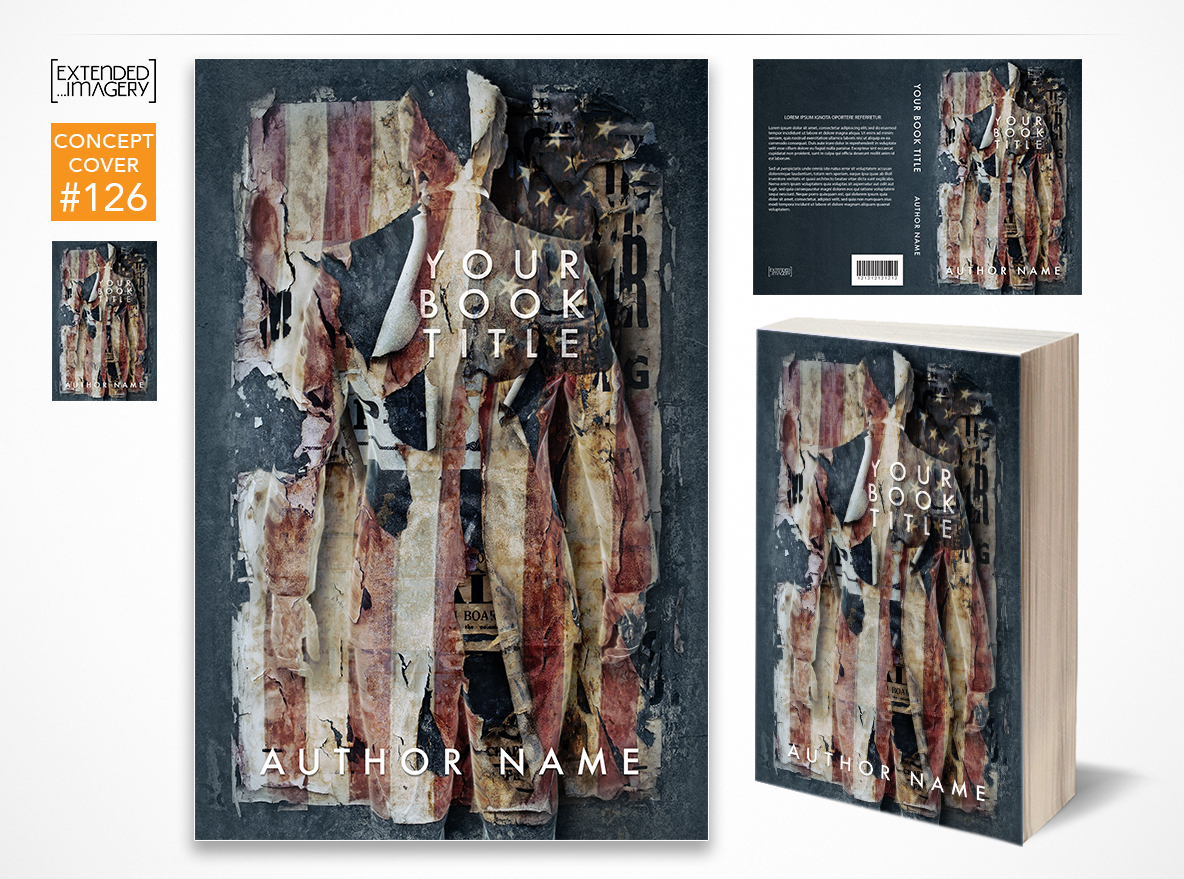
My cover designer is having a sale on his pre-designed covers, and they're gorgeous.
As I've said many times in the past, a great book cover is one of the four essential ingredients to finding readers (the other three being a great book, great description, and reasonable price).
If your sales are slumping, one of the things you should look at is your cover art. An amateurish cover can send subconscious signals to potential fans that the writing is also amateurish. You don't want to be dismissed by your readers before they even read your first sentence.
For a limited time, these pre-designed covers available on www.ExtendedImagery.com are $200. When you buy one, it's yours, and no one else can claim it. So if you see one you like, snap it up fast.
Via the Extended Imagery website:
When a book cover concept is created but not used as the final, I alter the design and offer it to other authors for a discounted price. See a concept that would work perfectly for your paperback/ebook cover? Email me at carl@extendedimagery.com with the number of the cover you're interested in.
Pre-designed covers are sold on a first come, first serve basis. Minor changes to elements such as the color scheme or font are included in the price. Additional fees will be required for any major alterations. Fees are determined by the complexity of the requested changes.
Just like with my custom covers all pre-designded book cover packages include:
- 6x9 inch (72dpi) ebook cover used for publishing on Amazon and all other major online retailers.
- 6x9 inch (300dpi) full paperback print cover used for Print-On-Demand books.
- 3D book mock-up image used for online promotion.
- Website banner used for social media sites, blogs and author sites.


As I've said many times in the past, a great book cover is one of the four essential ingredients to finding readers (the other three being a great book, great description, and reasonable price).
If your sales are slumping, one of the things you should look at is your cover art. An amateurish cover can send subconscious signals to potential fans that the writing is also amateurish. You don't want to be dismissed by your readers before they even read your first sentence.
For a limited time, these pre-designed covers available on www.ExtendedImagery.com are $200. When you buy one, it's yours, and no one else can claim it. So if you see one you like, snap it up fast.
Via the Extended Imagery website:
When a book cover concept is created but not used as the final, I alter the design and offer it to other authors for a discounted price. See a concept that would work perfectly for your paperback/ebook cover? Email me at carl@extendedimagery.com with the number of the cover you're interested in.
Pre-designed covers are sold on a first come, first serve basis. Minor changes to elements such as the color scheme or font are included in the price. Additional fees will be required for any major alterations. Fees are determined by the complexity of the requested changes.
Just like with my custom covers all pre-designded book cover packages include:
- 6x9 inch (72dpi) ebook cover used for publishing on Amazon and all other major online retailers.
- 6x9 inch (300dpi) full paperback print cover used for Print-On-Demand books.
- 3D book mock-up image used for online promotion.
- Website banner used for social media sites, blogs and author sites.




Tuesday, January 26, 2016
Guest Post by Silas Payton
The F-word Authors Should Learn from Rap Music
Hip hop, or rap, has done extremely well in the past twenty years and I would argue it is largely because of the F-word. Fans want the F-word, plain and simple, and I'm willing to bet this holds true with writing just as much as with rap music. The F-word I'm referring to is featuring. It's seen after the title of many, many hip hop songs, used to highlight a guest performer. Many music artists have worked together in the past, but no other music genre has done it so effectively. Writers would do well to learn from this strategy. In this post I highlight some rap examples of this success and discuss ways we can apply this technique to writing.
 When someone starts listening to a particular rapper, it's not long before they have a list of other rappers they also want to check out. Fans quickly become aware of other artists similar to, or liked by, their new star. When they are looking for something else to listen to, guess where they are going to turn.
Rappers seem to enjoy promoting each other. Not only do rappers collaborate on songs and show up to each other's concerts, but often other performers will be mentioned in a song without even being featured in it. The only benefit is to raise awareness. Perhaps it's from the roots or history of rap, I'm not sure. What I do know is rappers take cross-promotion to a whole new level.
Take for example, Eminem. Arguably one of the most successful rappers of all time. A quick scan of singers he has featured, or has been featured with, reveals an extensive list, including: Skylar Grey, Obie Trice, Pink, Rhianna, Sia, 50 Cent, Lil Wayne, Busta Rhyme, Cashis, Yelawolf, Dr. Dre, D12, Lloyd Banks, and Akon, Jay-z, and The Game, to name just a few. I stopped counting at sixty collaborators.
As a second example, I looked up Snoop Dogg. I stopped counting at ninety collaborators. Here's a quick scan of a few other big names: Jay-z, over sixty; Lil Wayne, over fifty; Kendrick Lamar, new to the scene has over twenty... eleven on one album.
This "featuring" in rap music, is simply cross-promotion done right. A fan of one is introduced to another through collaboration. Just as in the book world, rap fans are always on the lookout for more. As an author, there are a number of ways we can cross-promote as well. A few come to mind and I'll briefly mention each: anthologies, multi-author book collections or boxed sets, Kindle Worlds, co-writing a book with someone else, and a few other ideas.
Anthologies
An anthology is a collection of stories... quite often short stories, from different authors. An anthology often has a common genre or theme, which introduces fans to authors they may not heard of. It may be be a collection put together and sold for shared profits, for charity, or it may even be put out as a free collection. Either way it gets your name out in front of new readers.
Multi-Author Boxed Sets
This is a collection of books put out by a number of authors, usually at a discount price. Similar to an anthology, this may be a collection of books of similar genres. This is often a collection of previously released books bundled together. It could be a permanent option or and possibly only be available for a short time for a promotion. A huge benefit to anthologies and boxed sets are the collective marketing. If all authors are pushing the book or collection, more readers can be introduced to the other authors.
 Kindle Worlds
Anyone who follows Joe's blog should know about Kindle Worlds. Amazon has a series of Worlds that anyone can write in. These include a number of popular series from authors, comic books, and even television series. The idea here is the same... if you write in the 'world' of an established author, you may be able to entice some of their existing fans to cross over into your books.
I've been in J.A. Konrath's Jack Daniels and Associates Kindle World for roughly six months now, and sales have been steady since. Not only am I currently selling books to Konrath fans, but I have no doubt this will also bring new readers to my other books over time.
I have two in Joe's Jack Daniels Kindle World, White Lady, and Paralyzer. Please check them out.
Co-Writing a Book
If you are very lucky, you may be able to co-write with a more established author. There are many examples of new authors being given an opportunity. Self-published Jude Hardin writing with Lee Child, Russell Blake writing with Clive Cussler, and Joe Konrath writing with F. Paul Wilson, are a few that come to mind. Even if you collaborate with other new authors, it will still benefit both of you. This isn't something I've tried yet, but it's on my list.
 Author Mentions
In my first book, Going Under, I name drop as a character (my psychotic antagonist) reads a J.A. Konrath book. In my new book, 14 Gable Lane, due out in February, I've worked in a similar scene where I have a character reading a book by another author friend of mine.
Back Material: Recommended Reading Lists, and Bonus Material
I've also seen cross-promoting using a Recommended Reading List in your back pages. This has been used by traditional publishing for years. If you can get a group of writers together who you recommend, you can list each other. With ebooks, you can even add hyperlinks to the author's Amazon page. You can also pair up and have an introduction to a friend's book as an extra at the back... maybe a few chapters, or a blurb, maybe even a short story.
Cross-promotion is an easy way to get your work in front of new eyes, but the take home message here is not just how to gain readers. The real message is, there are many ways in which you can help others by cross-promoting their work. We all gain far more from trying to help others than from trying to help ourselves. Take a lesson from the rappers on this one...prolific use of the F-word will help.
Silas Payton
Hip hop, or rap, has done extremely well in the past twenty years and I would argue it is largely because of the F-word. Fans want the F-word, plain and simple, and I'm willing to bet this holds true with writing just as much as with rap music. The F-word I'm referring to is featuring. It's seen after the title of many, many hip hop songs, used to highlight a guest performer. Many music artists have worked together in the past, but no other music genre has done it so effectively. Writers would do well to learn from this strategy. In this post I highlight some rap examples of this success and discuss ways we can apply this technique to writing.
 When someone starts listening to a particular rapper, it's not long before they have a list of other rappers they also want to check out. Fans quickly become aware of other artists similar to, or liked by, their new star. When they are looking for something else to listen to, guess where they are going to turn.
Rappers seem to enjoy promoting each other. Not only do rappers collaborate on songs and show up to each other's concerts, but often other performers will be mentioned in a song without even being featured in it. The only benefit is to raise awareness. Perhaps it's from the roots or history of rap, I'm not sure. What I do know is rappers take cross-promotion to a whole new level.
Take for example, Eminem. Arguably one of the most successful rappers of all time. A quick scan of singers he has featured, or has been featured with, reveals an extensive list, including: Skylar Grey, Obie Trice, Pink, Rhianna, Sia, 50 Cent, Lil Wayne, Busta Rhyme, Cashis, Yelawolf, Dr. Dre, D12, Lloyd Banks, and Akon, Jay-z, and The Game, to name just a few. I stopped counting at sixty collaborators.
As a second example, I looked up Snoop Dogg. I stopped counting at ninety collaborators. Here's a quick scan of a few other big names: Jay-z, over sixty; Lil Wayne, over fifty; Kendrick Lamar, new to the scene has over twenty... eleven on one album.
This "featuring" in rap music, is simply cross-promotion done right. A fan of one is introduced to another through collaboration. Just as in the book world, rap fans are always on the lookout for more. As an author, there are a number of ways we can cross-promote as well. A few come to mind and I'll briefly mention each: anthologies, multi-author book collections or boxed sets, Kindle Worlds, co-writing a book with someone else, and a few other ideas.
Anthologies
An anthology is a collection of stories... quite often short stories, from different authors. An anthology often has a common genre or theme, which introduces fans to authors they may not heard of. It may be be a collection put together and sold for shared profits, for charity, or it may even be put out as a free collection. Either way it gets your name out in front of new readers.
Multi-Author Boxed Sets
This is a collection of books put out by a number of authors, usually at a discount price. Similar to an anthology, this may be a collection of books of similar genres. This is often a collection of previously released books bundled together. It could be a permanent option or and possibly only be available for a short time for a promotion. A huge benefit to anthologies and boxed sets are the collective marketing. If all authors are pushing the book or collection, more readers can be introduced to the other authors.
 Kindle Worlds
Anyone who follows Joe's blog should know about Kindle Worlds. Amazon has a series of Worlds that anyone can write in. These include a number of popular series from authors, comic books, and even television series. The idea here is the same... if you write in the 'world' of an established author, you may be able to entice some of their existing fans to cross over into your books.
I've been in J.A. Konrath's Jack Daniels and Associates Kindle World for roughly six months now, and sales have been steady since. Not only am I currently selling books to Konrath fans, but I have no doubt this will also bring new readers to my other books over time.
I have two in Joe's Jack Daniels Kindle World, White Lady, and Paralyzer. Please check them out.
Co-Writing a Book
If you are very lucky, you may be able to co-write with a more established author. There are many examples of new authors being given an opportunity. Self-published Jude Hardin writing with Lee Child, Russell Blake writing with Clive Cussler, and Joe Konrath writing with F. Paul Wilson, are a few that come to mind. Even if you collaborate with other new authors, it will still benefit both of you. This isn't something I've tried yet, but it's on my list.

In my first book, Going Under, I name drop as a character (my psychotic antagonist) reads a J.A. Konrath book. In my new book, 14 Gable Lane, due out in February, I've worked in a similar scene where I have a character reading a book by another author friend of mine.
Back Material: Recommended Reading Lists, and Bonus Material
I've also seen cross-promoting using a Recommended Reading List in your back pages. This has been used by traditional publishing for years. If you can get a group of writers together who you recommend, you can list each other. With ebooks, you can even add hyperlinks to the author's Amazon page. You can also pair up and have an introduction to a friend's book as an extra at the back... maybe a few chapters, or a blurb, maybe even a short story.
Cross-promotion is an easy way to get your work in front of new eyes, but the take home message here is not just how to gain readers. The real message is, there are many ways in which you can help others by cross-promoting their work. We all gain far more from trying to help others than from trying to help ourselves. Take a lesson from the rappers on this one...prolific use of the F-word will help.
Silas Payton
Friday, January 15, 2016
Freedom of Expression?
A guest post by frequent contributor to this blog, Barry Eisler. I chime in midway.
Barry sez: I just learned about an event put
on by an organization called New America
(formerly The New America Foundation): Amazon’s
Book Monopoly: A Threat to Freedom of Expression? Ordinarily, propaganda is
something that concerns me, but when it veers this far off into parody, I
sometimes welcome it as a comic diversion.
Because, come on, putting your tendentious
conclusion right there in the title and disguising it as a question, while an
impressively textbook instance of question-begging, in this context is also pretty
funny. Because, “Hey, we’ve already established that Amazon is a monopoly; we’re
just here to determine how much of a threat the company poses to Freedom and
All That Is Good. Is it an existential threat, like Roger Cohen
said about ISIS? Or merely an extremely threatening threat?”
And who knows, maybe they’ll
answer the question, “No,” right? Maybe the panelists will decide that Amazon’s
“book monopoly” is actually a benefit
to freedom of expression, as monopolies often are. It’s not as though they’ve
structured things so that the question answers itself, and I don’t know why
anyone would suspect this panel might be anything other than a diverse
collection of open-minded people honestly engaging in free inquiry and the
pursuit of knowledge wherever the facts may lead!
Thanks to the efforts of serious-sounding
organizations like New America (and if that vague but happy-sounding name
didn’t cause your bullshit detector to at least tingle, it should—see also Americans
for Prosperity and the Center
for American Progress), this “Amazon is a Monopoly” silliness is so
persistent that Joe and I dealt with it in our inaugural
post on zombie memes—“arguments that just won’t die no matter how many
times they’re massacred by logic and evidence.” Half the purpose of the Zombie
Meme series is to save Joe and me from having to repeat ourselves, so if you
want to have a laugh about why, despite its persistence, “Amazon is a
Monopoly” is so embarrassingly dumb and misguided, here’s
your link.
But here’s the amazing part: “Amazon
is a monopoly” is actually the clever
half of the event’s title. The really funny part is what follows: that Amazon
poses a threat to freedom of expression!
As I said in a previous
Techdirt guest post called Authors
Guilded, United, and Representing…Not:
Given that Amazon’s self-publishing platform enables all authors
to publish whatever they like and leaves it to readers to decide what books
they themselves find beneficial, while the New York Big Five (no concentrated
market power in a group with a name like that!) has historically rejected
probably 999 books for every one they deem worthy of reaching the public, a few
questions present themselves. Such as:
•
Who has really been “manipulating and supervising the sale of
books and therefore affecting the exchange of ideas in America,” and who has
really “established effective control of a medium of communication”—an entity
that screens out 99.9% of books, or one that has enabled the publication of any
book?
•
Who has really been running an uncompetitive, controlled,
supervised, distorted market for books—a company dedicated to lower prices, or
a group calling itself the Big Five that has been found guilty of conspiracy and price
fixing?
•
Who is really restoring freedom of choice, competition,
vitality, diversity, and free expression in the American book market—an entity
that consigns to oblivion 999 books out of a thousand, or one that enables the
publication of all of them?
•
And who is really ensuring that the American people determine
for themselves how to take advantage of the new technologies of the 21st
Century—an entity responsible for zero innovation and dedicated to
preserving the position of paper, or one that has popularized a new publishing
and reading platform that for the first time offers readers an actual choice of
formats?
Think about it. This “New America”
organization has put together a panel dedicated to persuading you that there
was more freedom of expression when
an incestuous group of five Manhattan-based corporations held the power to
disappear 999 books out every thousand written, and indeed performed that
disappearance as the group’s core function (they call this “curation”). And
that, now that Amazon’s KDP platform has enabled all authors to publish virtually anything they want, freedom of expression is being threatened.
For an organization calling itself “New
America,” these jokers sure seem wedded to the old version.
In fairness to New America, I
should note that their worldview is hardly unprecedented. The notion that the
traditional way of doing things is ipso facto the best way of doing things was
lampooned by Voltaire over 150 years ago through his character Dr. Pangloss,
who was convinced (before experience in the world introduced doubts) that “All is for the best in this best
of all possible worlds.” And Pangloss was himself based on the religious philosophy
known as theodicy—a word
coined over 300 years ago to describe a kind of faith that’s doubtless as old
as the human race (and a word I admit I like because it sounds a bit like
“idiocy”).
In fact, it was as recent as, say,
the 1950s that a group of tweed-jacketed, straight white male college
professors were genuinely convinced that the collection of books they deemed
the most intrinsically worthy—all, coincidentally, written by other straight
white males—represented the maximally possible amount of valuable expression,
information, and ideas. They even called their collection the “canon,” which I
admit did tend to make their subjective choices sound important and even
divinely ordained. As people came to question the absence of women and minority
writers from this collection selected exclusively by straight white males, I
imagine the straight white males genuinely believed that broadening the “canon”
to include women and minorities was a threat to freedom of expression and all
that. This is just the way a lot of people are wired, especially when status
and privilege are part of the mix.
And really, you do have to take a
moment to applaud the mental gymnastics required of otherwise presumably
intelligent people to say shit like “more authors writing more books reaching
more readers is threatening freedom of expression, the flow of information, and
the marketplace of ideas.” It’s War is Peace/Ignorance is Strength/Freedom is
Slavery level doublethink. On the one hand, it’s sad, but on the other hand, in
all the universe could there be a race as capable as humans of clinging so
resolutely to faith in the face of so many contrary facts? Seen in this light,
there’s something tragically beautiful about it.
And while I admit that New
America’s “day is night, black is white” bizarro worldview isn’t easy to
parody, I can’t resist trying. So…
Coming up next from New America: The Internet’s Dictatorial Grip: Impeding
Access to Information? And The Tyranny
of the Cell Phone: Shutting Down Communication? And Our Addiction to Paved Roads: A Threat to Freedom of Movement?
One more thing about this event
that’s unintentionally hilarious, and then I need to get back to something
worthwhile (AKA, the new manuscript). Take a look at the guest
list. If you hired a team of NASA scientists to design the most rabidly,
incestuously anti-Amazon panel possible, this is pretty much the group the team
would propose. Though I doubt even the scientists (assuming they had a little
dignity) would have gone to far as to bring in Douglas
Preston and his literary agent, Eric
Simonoff. I mean, this is getting pretty close to just adding clones of
existing panelists and eliminating the last fluttering fig leaf of diversity.
They also have the
dean of the Amazon Derangement crowd, Scott
Turow. And Franklin Foer, who in
fairness should be disqualified from even being on this panel because of his claim—in
his much-derided “Let us kneel down before Amazon” screed—that “That term
[monopoly] doesn’t get tossed around much these days, but it should”!
By the way, I wouldn’t be
surprised if Foer makes the same cringe-worthy claim again, on this very “Amazon
is a Monopoly” panel. The anti-Amazon crowd has never been particularly
educable.
Also present will be Mark Coker,
the head of Smashwords, an Amazon
competitor. And author Susan Cheever, a member of Authors United, an
organization that represents pretty much the platonic ideal of Amazon
Derangement Syndrome. A couple of anti-trust lawyers to provide a veneer of
legal gravitas (and to troll for clients, no doubt). And a second-year law
student named Lina Khan who has argued that Amazon “should
alarm us.”
And that’s it. That’s as diverse
and wide-ranging as the lineup gets. The full gamut of viewpoints, from A…all
the way to B.
Although really, even that feels a
little generous.
Oh, by the way, Eric Schmidt,
Executive Chairman of Google, another Amazon competitor, is the chairman of New
America’s board of directors, too. No conflict of interest there. Nothing to
disclose to anyone who might think this is some sort of disinterested,
scholarly event.
So yeah, it’s really that much of
a hive-mind lineup. But that’s not even the best part. The best part is, this
remarkably insular and incestuous exercise in groupthink has been assembled to
speak out against a purported threat to…freedom of expression! The flow of
information! And the marketplace of ideas!
None of this is an accident, by
the way. It isn’t just stupidity and incompetence. There’s a reason
organizations will try to take a narrow outlook and propagate it through
multiple mouthpieces: doing so can create the impression that a rare and
radical notion is in fact widely held—held even by ostensibly disparate groups—and
therefore more trustworthy. Indeed, this form of propaganda is a favorite of some
of the same reactionary groups New America is showcasing on its panel. As I
said recently about the supposedly “unprecedented
joint action” of some booksellers, authors, and agents complaining together
about Amazon:
Which brings
us to the second revealing aspect of this “propaganda masquerading as an
interview” drill. You see, in the standard “blow-job masquerading as interview”
gambit, it’s generally enough to hope the reader will just assume the
interviewer and interviewee are working at arms-length. Making the point
explicitly isn’t really the done thing. Here, however, perhaps not trusting
readers to be sufficiently gulled, the ABA and AG are at pains to describe the “unprecedented
joint action” of the AG, Authors United, the ABA, and the Association of
Authors’ Representatives in going after Amazon for monopolizing the marketplace of ideas, devaluing books, and generally crushing dissent, democracy, and all that is good. The impression they’re trying to create
is, “Wow, if so many separate organizations hate Amazon, Amazon must be
doing something bad.”
But what’s
critical to understand is that the most fundamental purpose of the Authors Guild, Authors United, the American Booksellers
Association, and the Association of Authors is to preserve the publishing
industry in its current incarnation. Whatever marginal differences they
might have (I’ve never actually seen any, but am happy to acknowledge the
theoretical possibility) are eclipsed by this commonality of purpose. Under the
circumstances, the fact that these four legacy publisher lobbyists agree on
something is entirely unremarkable (indeed, what would be remarkable would be
some evidence of division). But if people recognize the exercise as a
version of “No really, I read it somewhere…okay, I wrote it down first,” the
propaganda fizzles. And that’s why these propagandists have to nudge readers
with the bullshit about the “unprecedented joint action.” Otherwise, when
Authors Guild Executive Director Mary Rasenberger cites Authors United pitchman
Doug Preston as though Preston were a separate, credible source, people might
roll their eyes instead of nodding at the seriousness of it all. They might
even giggle at the realization that all those “When did Amazon stop beating its
wife?” questions were functionally being put by Rasenberger to herself.
So no, this
wasn’t remotely a cross-examination, or even a cross pollination (indeed,
publisher lobbyists are expert at fleeing
anything that offers even the slightest whiff of actual debate—which does make
their alleged devotion to the Free Flow of Ideas and Information as the Engine
of Democracy worthy of a smile, at least, if nothing else). It was just a stump
speech lovingly hosted by someone else’s blog. The sole reason for the exercise
was to create the misleading appearance of multiple, arms-length actors when
functionally there is only one.
In fairness
to the aforementioned Unprecedentedly Joint Actors, there is a rich heritage
behind this form of propaganda. For example, in the run-up to America’s second Iraq war, Dick Cheney
would have someone from his office phone up a couple of pet New York Times
reporters, who would then dutifully report that anonymous administration
officials believed Saddam Hussein had acquired aluminum tubes as part of his
nuclear weapons efforts…and then Cheney would go on all the Sunday morning talk
shows and get to say, “Don’t take my word for the aluminum tube stuff—even the New
York Times is reporting it!”
So leave aside the fact that the “joint
action” in question is anything but unprecedented—that it is in fact publishing establishment SOP. Anyone familiar with the record of these organizations will instantly
realize that the “unprecedented joint action” in question is a lot like the “joint
action” of all four fingers—plus the thumb!—of someone throwing back a
shot of tequila. Like that of a little boy pleasuring himself—with both
hands!—and trying to convince anyone who will listen that the Unprecedented
Left and Right Action is proof that “Everybody loves me!”
Okay, I apologize for the multiple
excerpts from previous posts. But what are you going to do? These bloviators
keep vomiting up the same tired bullshit, no matter how many times it’s
debunked. It just saves time to refer to the previous debunkings rather than
typing it all out again.
My advice to New America? If
you’re more than just a propaganda operation—if you really do care about
freedom of expression, and the flow of information, and the marketplace of
ideas—you might want to add at least a token panelist with a viewpoint that
differs even just a tiny bit from that of the nine Borg you’ve assembled to
intone that Amazon Is Evil and Will Destroy All That Is Good. Otherwise, your
event is going to feel more like a circle jerk and less like sex. And, doubtless,
with similarly productive results.
Joe sez: And just when I think I’m out…
Thanks, Barry, for turning a
spotlight on this silliness, and patiently picking apart why it is so silly. I’m sure the panel will be a
resounding success, much like all circle jerks and echo chambers are for those
involved. Masturbation is supposed to be satisfying, and a nice “atta boy!” and backslap at
the finish seems preferable to eating the soggy biscuit.
Don’t Google that if you don’t know
what I mean. You can’t unlearn it.
One of the reasons I’ve largely
eschewed activism lately is because I haven’t seen any ill effects from all the
Amazon bashing being done by the usual spin doctoring suspects.
At the risk of invoking Godwin’s
Law, the propaganda classic Triumph
of the Will was just released on BluRay for the first time. It’s an
effective piece of filmmaking, and Frank Capra imitated a lot of elements from
it for his Why We Fight series.
It worked. And it is still being
imitated today, both as a film, and as propaganda. Fear mongering is an old
standby for getting people on your side. I wrote a whole post about alarmist terminology and spin.
But I don’t think this approach works
when it comes to Amazon. People aren’t so ready to buy what the pinheads are
selling. Today we can have the New York Times, which I believe still has the
motto “All the news that’s fit to print”, show such stunning anti-Amazon bias
that the public
editor has called it out more than once, and the public simply doesn’t
give a shit. Amazon still gets their approval and their business, no matter how
many times David
Streitfeld one-finger-types his screeds while busting out knuckle babies
with his other hand.
The public likes Amazon. Even if
it were true that Amazon is planning to overthrow the government and replace
the Bill of Rights with a guarantee of same day free shipping, its approval
rating is so high that I don’t think most folks would care.
But for all the alarmist rhetoric
and soothsaying predictions of world domination, I’ve yet to see anyone other
than Big 5 apologists and their NY media cronies show much concern over Amazon’s
mounting dominance of online retail.
Maybe that’s because—wild guess
here—Amazon offers authors unprecedented opportunity to reach readers, and
offers readers the widest selection at the lowest possible prices coupled with
good customer service.
Authors
United, and the NYT, are doing everything they’re supposed to be doing to
spread their anti-Zon propaganda, but the people don’t care.
If I had faith in human nature, I’d
posit that access to the Internet (and the ability for anyone with second grade
spelling skills to type words into a search engine) can reveal in a click
or two what utter nonsense the morons are spouting.
But I think the more realistic
answer is that people simply like Amazon because it has a wide selection, low
prices, and good customer service.
So I no longer feel the need to
correct the greedy, self-interested 1% of authors who want to prop up an
archaic, inefficient, and ruthless publishing industry with stupid organizations
and articles and events. Joe Average might very well read about this panel in a
Streitfeld spat of “journalism”, cluck his tongue at how Amazon is destroying
freedom of expression, and then quickly forget about it when the UPS guy knocks
on the door with a box of Bounty because yesterday Joe used his Amazon Dash
button to order more.
The legacy publishing industry is dying.
Once it lost its lock on distribution, it lost the majority of its power. The only ones who will mourn that industry are the few handfuls of authors it made
rich. And when their corporate masters merge and downsize into inevitable
bankruptcy, watch how quickly they jump on Amazon’s teat when the seven figure
advances are gone.
But, for old times’ sake, let me
fisk New American’s event description. Their nonsense in italics, my replies in
regular font.
Amazon dominates the U.S. book market to a degree never before seen in
America.
But does it dominate the U.S. book
market to a degree never before seen in Canada?
Okay, I’m making fun of the lousy
sentence, but isn’t that like saying “In my house I dusted the bookcases to a
degree never before seen in my house?”
That's silly. Especially since I
switched to ebooks and got rid of my bookcases.
This corporation dominates every key segment of the market.
Wow, that's a lot of dominance. I hope the public has a safeword.
We had a cartel dominating publication and distribution for decades. It was an oligopoly called the Big 6. Not only did it reject a high percentage of books submitted to it—which can be argued is a form of censorship—but when it accepted a book it fucked the author in the ass with unconscionable, one-sided contract terms. Terms even the Big 5 enamored Authors Guild has spoken out against.
We had a cartel dominating publication and distribution for decades. It was an oligopoly called the Big 6. Not only did it reject a high percentage of books submitted to it—which can be argued is a form of censorship—but when it accepted a book it fucked the author in the ass with unconscionable, one-sided contract terms. Terms even the Big 5 enamored Authors Guild has spoken out against.
And this immense size gives
Amazon unprecedented power to manipulate the flow of books – hence of
information and ideas – between author and reader.
OK, reread what Barry and I have
written here. For over a hundred years, publishers have refused to publish the overwhelming majority of books, essentially preventing the public from ever reading them. They
had a right to do that, just like Chick-Fil-A has a right to be closed on
Sundays for ridiculous religious reasons.
But unlike the Big 6, or Chick-Fil-A, Amazon is allowing more traffic than ever before. More books are flowing with Amazon than flowed with the Big 6.
But unlike the Big 6, or Chick-Fil-A, Amazon is allowing more traffic than ever before. More books are flowing with Amazon than flowed with the Big 6.
Plus, Amazon isn’t a monopoly, and
doesn’t control the Internet, so if there were cases where Amazon decides it
doesn’t want to sell something, it can’t prevent it from being sold elsewhere.
Last summer a group of authors made the case that Amazon’s actions
constitute an abuse of its monopoly powers and threatens this vital marketplace
of ideas.
It was a shitty
case. But let’s not allow facts to get in the way of good propaganda. Because if you keep repeating the same lie, some people are bound to start believing it.
Unless they're Prime members. Then they'll cluck their tongues and ask Alexa to pre-order the new Barry Eilser book,
Unless they're Prime members. Then they'll cluck their tongues and ask Alexa to pre-order the new Barry Eilser book,
Amazon’s actions, they wrote, may already be affecting what authors
write and say.
As evidenced by Amazon refusing to
sell any work by any signatory of Authors United.
Oh… wait.
But look how Amazon has forced
writers to cower in the shadows, fearful of offering any sort of critique.
Oh… wait.
Hmm. Doesn’t a panel about Amazon
restricting freedom of expression prove that Amazon can’t restrict freedom of
expression? Or if it can, doesn’t want to?
Oops, my bad. They used the word "may". So it could read "may already be affecting what authors write and say, even though there is no evidence or logic to support that conclusion." Like someday I "may" own my own country, which I'll name Joetopia and make our main export beer parties. If you'd like Joetopia to export a beer party to you, let me know because it "may" happen. Wait by the phone until you hear back.
Oops, my bad. They used the word "may". So it could read "may already be affecting what authors write and say, even though there is no evidence or logic to support that conclusion." Like someday I "may" own my own country, which I'll name Joetopia and make our main export beer parties. If you'd like Joetopia to export a beer party to you, let me know because it "may" happen. Wait by the phone until you hear back.
The authors strongly urged antitrust regulators to take action, in what
would be the most important antitrust case since Microsoft in the late 1990s.
Except for the tiny little fact that,
you know, THERE IS NO CASE.
Barry and I take a lot of time to add these links to prove out points. You diligent readers are clicking on them, right?
Barry and I take a lot of time to add these links to prove out points. You diligent readers are clicking on them, right?
Join New America’s Open Markets program for a discussion of Amazon’s
monopoly over books and what it means for American readers and America’s
democracy.
For God’s sake, someone think of the children! Because an online retailer is all that stands between the freedom
to vote for representatives in government (that's the definition of democracy), and a zombie world where neighbors
feast on neighbors and the only law comes from the business end of a twelve gauge. Because that argument makes as much sense as theirs.
Some of the nation’s best-known authors will discuss their personal
experiences with Amazon.
And nary a one with a contrary
point of view! Perhaps because they couldn't find any author with a good personal experience with Amazon. I mean, other than a hundred thousand or four. But I'm sure New America has much better things to do with their time than a little research.
Antitrust lawyers and experts in
Big Data and price discrimination will then discuss the larger effects of the
corporation’s behavior, and whether the government should bring a case against
Amazon.
With Data so Big it’s Capitalized! Did that become a thing and I missed it?
And what could they possibly say in regard to price discrimination? Amazon fights to keep prices low. The Big 6 fight to keep them high. They illegally collude to keep them high. They print the prices on their damn books to keep them high.
And what could they possibly say in regard to price discrimination? Amazon fights to keep prices low. The Big 6 fight to keep them high. They illegally collude to keep them high. They print the prices on their damn books to keep them high.
Could they be going into the
nefarious business practice of co-op, and Amazon charging publishers for better
visibility? Is that the discrimination they mean? Or maybe loss leads?
Last I checked, both were not only
legal, but commonplace in retailers.
I wonder what the antitrust
lawyers will say about Amazon allowing anyone to sell through Amazon. In other
words, if Amazon decided it no longer wanted to sell Big 6 titles, I could open
up an Amazon seller account and sell Big 6 titles on Amazon. Can someone explain to me
how that limits the flow of books between reader and author?
Follow the discussion online using #BookMonopoly and follow us
@NewAmerica.
No thanks. But here's a hashtag you can follow: #StoptheStupid.
Lunch will be provided.
And it will be the only
substantive thing offered that afternoon.
Now I’m going back to my WIP. When
the NYT write-up of this stupid event runs, I’m going to ignore it.
Subscribe to:
Posts (Atom)


