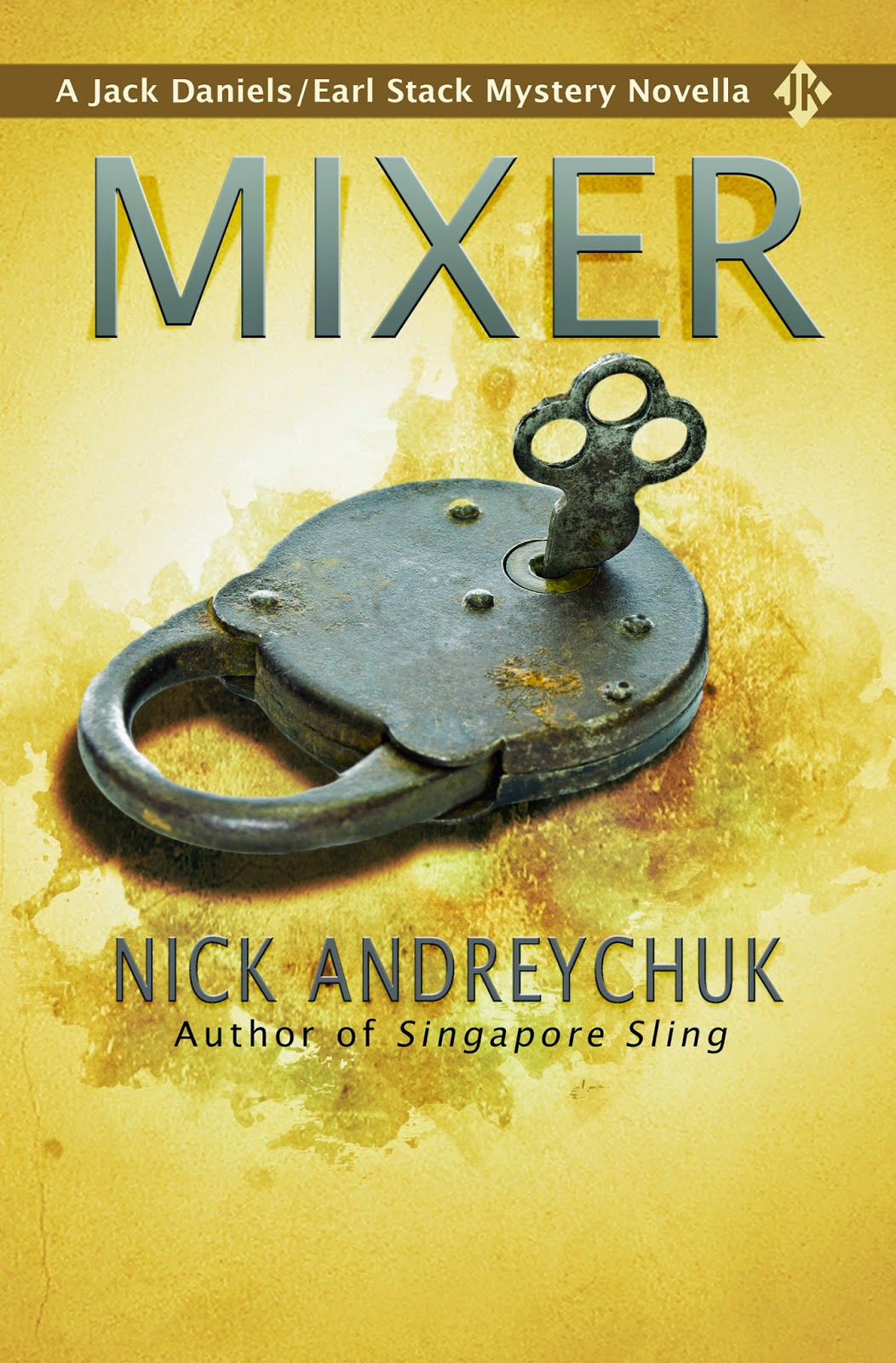
Right now there are 38 stories, with more on the way.
I first blogged about this last week. TL;DR - writers can now create stories using characters and situations from my books. How my KW is different from other Kindle Worlds (at the time of this writing) is that writers can keep the rights to their characters.
This is a big deal, because it allows authors to team up their characters with mine. Or their characters can kill my characters. Or have sex with them. Or whatever.
The takeaway here is that writers can do cross-overs and mash-ups, which is a fun way to cross-pollinate fans, and could never be done before in KW.
I encourage everyone reading this to check out the launch stories. Simply click on the title under the cover art.
In the upcoming weeks, many of these authors will share their experience on this blog. As far as experiments go, this one is pretty big. It has never been done before, and we're in uncharted waters. I'm looking forward to seeing how it goes.
And if you're interested in writing in the Jack Daniels and Associates Kindle World, or the Codename: Chandler Kindle World, you can. You don't need my permission, or my help. You don't need to even tell me. You can do it entirely on your own. It's easy, and you keep half the royalties. All you have to do is follow the guidelines. So check those out, check these out, and mix your characters with mine.
The points I made then are still relevant and valid, but I wanted to add a bit to it based on some comments in my last blog post.
I talked about how fun it would be to write a comic where Superman, Hulk, and Spawn fight, but how that isn't ever going to happen.
DC owns Superman. Marvel owns Hulk. Image owns Spawn.
Since none of these characters are in the pubic domain, the only way to use them is with a license. But that's only one level of restriction. Even with an approved license, licencors will have rules. The few existing Marvel-DC/Hulk-Superman fights have been lackluster at best. That's because the rules imposed by the licencor override any creative freedom on the part of the author/artist.
Writers who work for a specific comic company have rule sheets and bibles for what is allowed and what isn't. Unless special exceptions are given, there are boundaries. It's stifling creatively.
I'd love to write a comic with Hulk, Superman, and Spawn, and have them beat the hell out of each other for 64 pages, instead of throw each other around for six panels and say stupid stuff. And I'd like to decide who wins, not be restricted or constrained by what the licencors' agree on.
I went into this Kindle World giving writers almost total freedom, with the exception of the guidelines that Amazon imposed (no ads, no porn, no racism). I allow any kind of sexual relationship. I allow writers to kill my characters. I allow writers to bring in their own characters.
Marvel and DC aren't doing this with their IPs, and during the rare times they had crossovers, there were either rules, or they let the fans decide.
Ultimately, my point is that Hulk would tear off the Man of Steel's arms and beat him to death with them. But that story won't ever be written by me, because of copyright.
How interesting it would be if fair use allowed writers to use the IPs of others. Let's say it was a limited use; maybe 15% of the completed protect. It would still be a game-changer.
But as we saw in the music sampling lawsuits through the ages, it ain't gonna happen.
Which is a shame.
I liked He's So Fine, but preferred My Sweet Lord. I like Bittersweet Symphony over the exceedingly rare orchestral version of Time is On My Side. Super Freak, and You Can't Touch, this can exists side-by-side. So can Under Pressure and Ice Ice Baby.
I can see paying a reasonable fee for fair use, but turning over full copyright and all royalties for a riff seems wrong. These songs weren't covers, or even re-imaginings. They were new art, based in part on old art.
Which is what Shakespeare did with many of his plays. Retell old tales in a new way. Which we're still doing with Shakespeare (West Side Story, Haider, Forbidden Planet, Gnomeo & Juliet.)
In 1936, Carl Orff took some poems written hundreds of years earlier and composed the Carmina Burana. Fifty years later, Orff's estate successfully sued the band Apotheosis for doing a techno version of O Fortuna.
Should Apotheosis have gotten permission to use a song written by a dead guy? Perhaps, but I'd argue for some sort of fair compensation. Maybe a one-time fee. Maybe percentage-based. But it shouldn't be up to the dead guy's estate. Once a creator dies, why not let that work spawn other works? Let the estate get a cut, but don't allow the estate to make any decisions on how the license is used. If I wanted my heirs to decide how to use my characters, I'd let them make the rules while I was still alive. Orff's estate killed a song (it's no longer available new) that introduced many, including me, to Orff's music. Orff may have even liked the version, had he been alive to hear it.
But art lost out to copyright. You can still download illegal versions of the Apotheosis remix, buy used versions, hear it for free on YouTube and all over the Internet, but neither Orff's estate nor Apotheosis earn a dime from it.
Pretty stupid. Especially stupid because the hit Apotheosis version is probably the catalyst that made O Fortuna so popular in modern society. They recorded their techno remix in 1991, and many people, like me, heard Orff's music for the first time. Prior to 1991, according to Wikipedia, there were a handful of popular culture uses of O Fortuna. Since 1991, there have been four dozen.
I wonder how much of that song's modern popularity is because it was a Top 10 hit, on Billboard for 11 weeks, thanks to Apotheosis. I wonder how much the Orff estate knows that. I can guess how much they've benefited monetarily.
We can argue who rightfully deserves the money--some heirs who did nothing to create the song, or a group that modernized something 55 years old and made it a big hit. That's an argument I want to have.
We live in a world where artists are regularly screwed by publishers, producers, and record labels, but it's okay because they signed on the dotted line, even though the contract sucked. But then we have a ridiculous double standard, where heirs and companies can hold onto the rights to Mickey Mouse and Sherlock Holmes and Carmina Burana for long after the original artists died.
I know I'm bringing up a lot of ideas here, some of them possibly conflicting, so let me highlight a few points:
When an artist dies, any IP they created should revert to heirs.
If that IP is currently being exploited by a company (producer, label, publisher) it should still revert. Artist dies, contract is over.
Once reverted, heirs are allowed to hold that copyright for a minimal amount of time. Say 40 years. But they don't have a say in how that copyright is used.
Once reverted, any other artist or producer can use that IP in a commercial version of fair-use. I'll propose that if a certain percentage of the IP is used in a certain percentage of a new work, the heirs get a certain percentage of profits associated with that work, or certain set fees if that work is for advertising purposes.
If the artist is still alive, there should still be commercial fair use laws. Perhaps stricter than what the heirs have, but other people should still be able to use what the artist has done. I point to my Jack Daniels & Associates Kindle World as an example of that. Go ahead and use what I created, however you'd like, but pay me some set percentage.
These are ideas that I feel should be discussed, not laws I want to put into effect. I see problems with some of my points.
An IP creator, or their heir, might not want these IPs used in association with certain things. Advertising. Religious, political, or sexual issues. Morals antithetical to the original artist's intent.
But if the artist is dead, isn't the artist is past the ability to care? And if the artist is alive and popular, fans are writing slash fiction anyway, where Luke nails Leia and Harry nails Hermione and Hulk nails Superman. I've even heard some unsubstantiated rumors that someone took Edward and Bella from Twilight, threw in some S&M, and then had a minor hit. And Stephanie Meyer was okay with it.
There is the possibility that public oversaturation of an IP can cause it to lose value. But I'd call that speculation. I bet if Stephen King or James Patterson did a Kindle World following my example, they'd increase their income and popularity. Patterson outsells King because he already allows other artists to create works under his brand. Patterson makes sure he keeps control over the works produced, but is that being a shrewd and smart businessman, or ultimately leaving money on the table? Amazon reviews show a lot of fans don't like Patterson's books when they're written by others. But many do. And the books keep selling. Wouldn't loosening up restrictions allow for even greater sales?
At what point does an IP become oversaturated? Or killed by bad reviews? Has that ever happened? Hasn't it been shown that bad publicity is better than no publicity, and being obscure is worse for your career than being mediocre?
I know this all seems the opposite of everything we've been taught. It's certainly much different than the current laws.
But is it wrong?
People cosplay, and the IP holder doesn't get a dime (unless that holder is smart and sells their own costumes). No one knows how many YouTube videos are put up and taken down on an hourly basis that involve other peoples' intellectual property. (You down with O.P.I.P? Yeah, you know me. And that's parody, so it's fair use you see.)
DJs makes mixes. Musicians sample. Fan fic abounds. People upload their covers and remixes of popular songs.
Information wants to be free. That doesn't mean artists don't have a right to make money, or that someone who patents a pill to cure a disease shouldn't be allowed to make a fortune, or that a successful business shouldn't be able to trademark their logo. But there is a line somewhere. I'm not charging you to read this. When I speak to my friends, they don't have to pay me. Every original sentence I write and original word I utter does not mean the world owes me $$$, just like if I'm busking on Michigan Avenue with my C-harp, belting out the techno version of O Fortuna for tips, I shouldn't have to give Orff or Apotheosis a dime.
There is a line. And I don't think the current line meets the needs of the current population. Not the artists. Not the fans. Not the consumers.
It probably meets the needs of the big businesses who exploit artists and fans and consumers, which is reason enough for it to be re-evaluated.
I write for a character named Jack Daniels. When the whiskey makers heard about this back in 2003, they sent me a very kind letter wishing me success, but asking if I wouldn't mind putting a disclaimer in the beginning of my book.
Though the Lt. Jack Daniels mysteries are no way sponsored by, endorsed by, or related to Jack Daniel's Tennessee Whiskey, when I tell people my main character is a female cop named Jack Daniels, they get the joke.
Had Jack Daniel's Properties, Inc been litigious, they could have scared my publisher into not releasing Whiskey Sour. But they were polite and generous, and didn't sue me to prevent the start of my career. Hopefully my little series has sold a few bottles of whiskey for them, and though I am in no way sponsored, endorsed, or related to Jack Daniels Tennessee Whiskey, I will admit to having enjoyed more than a few bottles over the decades, including some special bottlings like the 1991 Barrelhouse No 1 which has been one of the most pleasant liquor experiences of my life.
Imitation is the sincerest form of flattery, and I love me some Jack Daniel's. I love that I can write about a character named Jack Daniels. And I love allowing other writers to write about that character.
And I'd love to write sequels to Salem's Lot, and the Exorcist, and Silence of the Lambs, and love to bring Cheers back and make Kramer and Al Bundy regulars, and while I'm at it I want to do a screenplay where Han and Starbuck are in the Millennium Falcon, being chased by Klingon Birds of Prey, and are forced to land on LV-426 where they run into a new Alien hive.
Also, Han nails Starbuck.
The Dirk Benedict Starbuck.
Kara Thrace it's awesome, but it's my slash fic and I can do what I want.
Except I can't.
I like the post-YouTube world. The post-YouTube world is the world where Rorschach and Deadpool can get a million hits (a dozen of them all mine). Where I can download a music torrent because the album was never released on CD or mp3, and I don't have a turntable to spin the used LP because I'm not a hipster. Where people share free thoughts on Twitter, and free pics on Pinterest, and book quotes on Goodreads. Where user-generated-content-based Wikipedia is the go-to place for facts. Where Amazon can release a book that collects some of its Funniest Customer Reviews. That book has a review by me in it. I didn't get paid. I didn't care. I wrote it to amuse others.
Just like I'm writing this blog to inform others. And I'm not charging anyone.
Maybe I'm wrong, but in an age of net neutrality and free information and the unprecedented ability of the World Wide Web to enable and encourage open exchanges of opinion, ideas, and art, current copyright law seems overly restrictive, archaic, and broken. It seems set up to protect the rich at the expense of society. Protect big business and screw the artist. Limit artistic freedom and expression.
We're not having this conversation in court because those with the money want to keep their money.
I like capitalism. I like money.
But I think there's something wrong with the idea that if I work a 40 hour week at Name Any Business, I get a salary or an hourly wage, and the money that I earn is a set, agreed-upon amount. But if I work 40 hours on a story--which is something I love doing and a helluva lot easier than working in a factory (done that), a restaurant (done that), construction (done that), an office, (done that)--I get to earn money for my lifetime, and my heirs can keep earning for 70 years after I die.
Lemme steal a few quotes from Wikipedia to further support my position.
Benjamin Tucker, opposing intellectual property, writes, "...the patent monopoly...consists in protecting inventors...against competition for a period long enough to extort from the people a reward enormously in excess of the labor measure of their services, – in other words, in giving certain people a right of property for a term of years in laws and facts of Nature, and the power to exact tribute from others for the use of this natural wealth, which should be open to all.
Petra Moser: Overall, the weight of the existing historical evidence suggests that patent policies, which grant strong intellectual property rights to early generations of inventors, may discourage innovation. On the contrary, policies that encourage the diffusion of ideas and modify patent laws to facilitate entry and encourage competition may be an effective mechanism to encourage innovation.
Stephen Kinsella: [I]magine the time when men lived in caves. One bright guy—let's call him Galt-Magnon—decides to build a log cabin on an open field, near his crops. To be sure, this is a good idea, and others notice it. They naturally imitate Galt-Magnon, and they start building their own cabins. But the first man to invent a house, according to IP advocates, would have a right to prevent others from building houses on their own land, with their own logs, or to charge them a fee if they do build houses.
Thomas Jefferson: If nature has made any one thing less susceptible than all others of exclusive property, it is the action of the thinking power called an idea, which an individual may exclusively possess as long as he keeps it to himself; but the moment it is divulged, it forces itself into the possession of every one, and the receiver cannot dispossess himself of it. Its peculiar character, too, is that no one possesses the less, because every other possesses the whole of it. He who receives an idea from me, receives instruction himself without lessening mine; as he who lights his taper at mine, receives light without darkening me.
I haven't done much linking in this blog post, even though I've mentioned a lot and read a lot that could defend my position. I'm not trying to prove my ideas are correct. I'm not even sure they are. But I think they are provocative enough to start a discussion.
Philosopher John Locke said there were three natural rights that all people had.
Life: everyone is entitled to live once they are created.
Liberty: everyone is entitled to do anything they want to so long as it doesn't conflict with the first right.
Estate: everyone is entitled to own all they create or gain through gift or trade so long as it doesn't conflict with the first two rights.
Yet once Locke wrote that, he no longer owned it. In fact, Jefferson's taper was lit from Locke's, and I don't think Locke got any royalties for helping found the principles that the USA were based upon.
I don't know if Locke meant Ideas when he pondered on the concept of Estate. If I paint a picture, there is one of them. It is my right to do with it as I please. But neither Locke, nor Jefferson, had ever conceived of the Internet, where unlimited copies of a jpg can be made, for free, forever.
Art, and media, are forms of communication. As a species, communication has helped up thrive. It doesn't seem to me that laws that prohibit communication are good laws. I can draw Mickey Mouse for my personal use. I can buy Mickey Mouse cartoons on DVD, used. I can name my dog, or my child, Mickey Mouse. I can write a story that features Mickey Mouse, and put it on the Internet. Gte Mickey Mouse tattoos over my whole body. But I can't write a Mickey Mouse story and sell it without permission.
I've read, and enjoyed, Malcolm Gladwell's book Outliers. I've used the term "outlier" on my blog many times over the years, but haven't paid Gladwell any more royalties than Jefferson paid Locke.
Why can I write about someone becoming an expert at something by spending 10,000 hours doing it, and I don't have to pay Gladwell (who cited a 1993 paper written by Anders Ericsson, and I don't believe Gladwell paid him either), but I can't have a single picture of Mickey Mouse in my novel--even with citation to Walt Disney and Ub Iwerks--without permission and licensing fees? Why do novels and non-fiction have different rules? Can't we learn as much from Catcher in the Rye as we can from Principia Mathematica? And didn't Whitehead and Russell get most of those equations from others?
Salinger sued Fredrik Colting for writing a sequel to Catcher sixty years later. Salinger won. Could Cantor's estate have sued Russell and Whitehead for including ordinals in the PM without paying royalties? Any reasonably smart empiricist could successfully argue that math is an invention rather than a discovery, and thereby should be protected under copyright law.
But that would be silly, wouldn't it?
We are in a world where a monkey can take a selfie, and it is debated in court who owns the copyright.
Isn't that sort of extreme?
At what point does an idea, a group of words, an image, a concept, character, a story, cease to belong to one and can be considered part of the collective human experience? The creator's life plus 70 years? The moment it pops into existence?
Again, I'm not sure of the answer. But I don't think current copyright law effectively answers the question.
Search for "Star Wars Fan Film" on YouTube. Count how many you find.
You'll be counting for a while.
I'd guess that many of those films--and there are thousands--took time, talent, and money to make. I'd argue they strengthen the Star Wars brand. I also know, from experience, that some of those filmmakers will go on to create their own IPs. Many not as successful as Star Wars, but Star Wars may have given them the inspiration to eke out their own living someday.
Just like I'm not able to eke out a living writing about serial killers, though I'll never be allowed to write that sequel to Silence of the Lambs where Clarice Starling and Will Graham hunt down Hannibal Lector. With the help of Lt. Jack Daniels.
And while that may not be a loss for the literary world and a tragedy for Art with a capital A, I can't help but wonder if in some parallel universe I'm doing just that, and having a damn good time.
I think this is a killer idea, and it is akin to one I has years ago called the Active Ebook. My intent was for authors to allow other writers to use their characters--what has been known as fan fiction--and monetize it.
Fan ficcers get a bad rap. We all learn to write (and speak, and walk) by imitation. Copyright does do some good in protecting intellectual property and allowing a writer to make money from the works they create, but it is also extremely stifling to ideas, creativity, and Art with a capital A. I'd love to write a Spenser book, or a new Dr. Seuss Cat in the Hat, or a graphic novel where the Hulk beats the hell out of Superman and Spawn. But I don't own those properties, and though they may inspire me, copyright law prevents me from using those characters.
Then Kindle Worlds appeared, giving fan ficcers, readers, and professional writers a chance to play in another writer's sandbox, and I applauded it.
But I didn't join.
Though Amazon deserves major kudos for creating this opportunity, the copyright terms were still too restrictive for me. Currently, authors on Kindle Worlds take ownership of the stories (and their contents, including characters) that others write.
So I can write a John Rain thriller. But if I create any new characters to put in the story, they belong to Barry. And if I team Rain up with one of my characters, like Jack Daniels or Chandler, those would also belong to Barry.
This was introduced by Amazon as a way to get writers to play together. Kindle Worlds wanted authors to create characters, and then for other writers to be able to use those characters and build upon them.
That makes sense. But it also prevents Rain and Daniels from teaming up in a KW adventure.
So I didn't allow a JA Konrath Kindle World, because I believe writers should keep the characters they create.
Six months ago, I began to talk with Amazon about making this possible.
Now it is.
On March 3, Amazon is launching my Jack Daniels & Associates Kindle World. And thanks to a tremendous effort on the part of the KW team, the rules have been tweaked in the authors' favor.
You can take any of my characters from eighteen of my novels, and write stories about them. I have no rules or boundaries, and you can mix and match. If you want to take the bad guys from Endurance and have Jack Daniels hunt them down, go for it. If you think Tequila and Phin would make great gay lovers, have at it. If you're sick of Harry McGlade's constant wisecracks, kill him off.
And your character can be the one to kill him.
Besides mixing up and combining the dozens of characters and worlds I've created, you can also use your characters in these worlds. Got a science fiction hero? Bring him into my Timecaster world, and you keep your character rights. Think your streetwise detective would be a good match for Jack Daniels? Go for it, and you keep your character rights.
All the characters you write, you keep. Even if you invent a new character specifically to use in one of my KW stories, that characters stays yours, not mine.
This is a cool chance to do mash-ups and crossovers. Your characters and my characters in the same story, no holds barred, and you don't lose the rights to your characters. Ever.
Q: So how does it work?
A: Very much like KDP. You write a story. Create a cover (KW also has a cover creation app). Make sure it is properly formatted. Then upload it.
Q: How much do I make?
A: As with KDP, it depends on the length of the story. You and I split the royalties evenly after Amazon takes its share.
Q: How do I get paid?
A: Same as KDP. This is open to US authors with bank accounts. If you live outside the US, email me and we'll try to work something out.
Q: Do you have to approve of the stories?
A: Nope. You're on your own, without any restrictions from me. Amazon does the final approval, and as long as you stick to the guidelines, anything goes.
A: That would be fun, but I'm swamped with other work and I can't take on any new projects at the moment. You're on your own, and I have total faith in you.
Q: Will you endorse the story I wrote in your world?
A: I can't endorse any stories, because that's like being with a group of friends and favoring one over all the others. But I will link to your story on my website, Tweet about it to my followers (make sure you let me know about it, my Twitter name is @jakonrath), and you can also do a guest post blog.
Q: Why would I want to write in your Kindle World?
A: Maybe because you like some of my characters and always wanted to write about them. Maybe because you'd like to team up one of your characters with one of mine, or have them be enemies. Maybe you know I've sold millions of books, and this will give us both a chance to cross-pollinate our fanbases. Whether you're in it for love, or for money, you have a sandbox of 18 books to play in. That's over a million words of content for you to use, in genres such as mystery, police procedural, thriller, horror, and science fiction. Let your imagination run wild.
Q: You haven't listed any of your Codename: Chandler Books with Ann Voss Peterson.
A: The Codename: Chandler Kindle World is going to launch later next month. It will be separate from the Jack Daniels and Associates Kindle world, but you'll be able to use many of my characters in that world.
Q: Why did you separate those worlds?
A: Codename: Chandler is co-written by Ann. We share that IP. By making it separate, we make sure those stories won't get lost in my solo IPs.
If you're interested in writing in the Codename: Chandler KW, we will be looking for launch stories. Email Ann through her website, and she'll put you in touch with Amazon.
Q: If I decide to write in the Jack Daniels & Associates Kindle World, or the Codename: Chandler Kindle World, do you have a list of the characters I can use?
Of course, I strongly suggest you read some of my work before you start writing in my world, because my fans will know if it doesn't fit in.
Q: So why are you doing this? Are you selling out?
A: I like to think of it as sharing the wealth. I got lucky with my career, lots of readers know my brand, so why not let other writers benefit from my name-recognition?
Q: If you're such an altruist, why not let people write in your world and make all the money, not just half?
A: Because, though I try my best to be generous, I'm also a capitalist.
Q: What if some of these stories suck? Won't that tarnish your brand?
A: Does fan fic tarnish Harry Potter or Twilight? Fifty Shades of Grey began as Twilight fan fic. My very first (unpublished) stories had me trying to imitate Ed McBain's 87th Precinct series. If McBain's estate allowed fan fic under the terms I'm offering, I'd leap at the chance to team up Jack Daniels and Steve Carella.
But I didn't answer the question. All stories sink or swim based on their own merits. I expect good stories will make readers happy and bring more people to my brand. If some stories aren't so good, I'd assume reviewers will warn other readers away from those stories.
If you're a writer who wants to write in my Kindle Worlds, I'll give you the same advice I give all writers: Don't write shit.
My Kindle Worlds site officially launches on March 3, and there will be over 30 stories available at launch.
According to those voting in the audience, my side (Amazon is for readers) lost 43% to 50%. According to the online poll, we won by an overwhelming majority, 72% to 28%.
Winning or losing didn't matter to me. I knew I would lose before I even accepted the invitation. More on that later.
And for those who are wondering, I found Scott Turow to be smart, personable, charming, and a nice guy. If he disliked me he hid it well, and I certainly didn't dislike him. Considering all the shit I've been giving him on this blog for years, it was a surprisingly jovial meeting.
That said, he's still wrong about a lot.
I'm very tempted to go through the transcript and fisk the points he made during the debate that I didn't get to respond to, but I'm going to limit myself to Turow's closing statement.
Scott Turow: I do not judge things on the basis of what's good for me. In point of fact, I spent 20 years trying to get my first novel published. I was Joe Konrath and that experience never leaves me. And I am concerned about what is good for authors in general, not what's good for best-selling authors.
Joe sez: Scott may not judge on the basis of what's good for him. But I do it all the time. I believe what's good for me is good for writers in general. However, I was never the head of a huge writing organization, and when I make a statement it isn't picked up by the media and touted as fact to millions of people.
Turow spent 20 years trying to get published. I spent 10. I was rejected more times than Scott, and wrote a lot than he did before finding any sort of monetary success, but I can believe that he knows what it is like to labor in obscurity and that experience is still with him.
Here's the thing, though: he may have been Joe Konrath, but I have never been Scott Turow.
There are lots of authors who have been Joe Konrath, trying to sell a book. And by "lots" I mean "the majority". But a very minuscule, teeny-tiny percentage ever had the success Scott did. While the legacy publishing industry is capable of producing a huge hit like Turow, it's as rare as winning the lottery. But you aren't even allowed to by that particular lottery ticket unless the gatekeepers allow it.
Anyone can self-publish. Though the majority won't ever have the success that I've had, at least there aren't any barriers to entry. When presenting an argument for the masses, you shouldn't for a side using the ideals as examples. You should argue using the mean (or median) data. Most writers won't attain my success. Fewer will attain Turow's. But, as www.authorearnings.com has repeatedly shown, more writers have a chance to make more money via self-pubbing than attempting the legacy route.
That is what is good for authors in general.
Scott: Amazon wins. We all have to become entrepreneurs. The best-selling authors are the people who will prosper most in that situation, because it's an undifferentiated mass. People whose names are already known would be the winners. But I know -- I know that the system we have now -- yes, great, Joe, good. I really and truly am happy that you have found an audience.
Joe: Thanks, Scott. And I truly am happy for your success. Why wouldn't I be? This isn't zero-sum, and envy is senseless and petty.
But even when I did land a legacy contract (in fact I landed 4 of them) I still had to be an entrepreneur in order to keep my head above water. I signed at 1200 bookstores and did blog tours and visited 42 states and dozens of conferences, book fairs, and libraries. I did all of this because I wasn't picked to be Scott Turow with millions in coop and advertising.
Except for a few handfuls of mega-bestselling authors, we all have to run our careers like a small business, no matter how we publish. We all use social media and the Internet. Many of us make personal appearances. Many of us advertise. It's part of being an author. Amazon's market dominance hasn't effected that.
Scott: I want every author to find an audience who deserves one. But the system that has perpetuated that is that of traditional publishers. And remember that these gentlemen do not deny that Amazon's ultimate goal is to describe -- is to destroy traditional publishing, to force every author to become an entrepreneur, his own marketer, his own editor, and we will lose good writers in the process.
Joe: On the surface, a good closing with a rousing emotional appeal.
But it's easy to pick apart.
Just because the old way of reaching an audience involved legacy publishers doesn't mean it is the best way. It was the only way, so the point is redundant. For the majority of human history, the only way to make fire was with sticks and stones. Millions of successful, life-saving fires were started that way. That doesn't mean I reach for two chunks of flint when I want to light up my bong.
And equally poor point is conflating those companies who publish--either Amazon or the legacy industry--with writers. Writers are the ones who actually write the books, not editors or publishes or distributors. And as I've pointed out ad nauseum on this blog, it makes little sense for middlemen of any kind to get the lion's share of the profits.
Amazon's goal may be to destroy legacy publishing, but legacy publishing has been rendered a value-added service. They were once essential, now they are middlemen who command a hefty price.
Amazon may kill all the legacy publishers, but there is no direct correlation between that happening and authors no longer writing books. That isn't the argument we debated (Amazon is the reader's friend) and it isn't the argument I've made on this blog (legacy publishers are bloodsuckers and Amazon's goals are currently aligned with the goals of authors). It's a straw man to represent the debate as "Amazon will destroy legacy publishing, and then good writers will stop writing", and beyond being an informal fallacy it's just plain wrong. I'm not with a legacy publisher, and I didn't stop writing. I did more self-promo and spent more time and money on marketing when I was with legacy publishers than I have self-publishing. And I make 20x the amount of money self-pubbing than I did legacy publishing, and reach many more readers.
I can't stress that enough. I was one of the lucky sods who landed publishing contracts, and made about $40k a year writing professionally. That's better than the majority of legacy authors. But that pales next to what I'm doing now.
Turow, however, would likely never reach his current income and readership without legacy publishing. But he's the uber-rare minority.
Even though he stated the contrary, I believe Turow is judging on the basis of what's good for him. I can understand that. You dance the with person you brought to the party, and stick up for them when they're being attacked. Fair enough, but when you say alarmist stuff like this you can bet some people are going to buy it (like the audience did). And when writers hear it, they can make career decisions based on what a respected and famous author says, and in doing so they are playing a carny game instead of possibly paying some bills.
Though he didn't close with a straw man, Turow's debate partner, Franklin Foer, ended on this note when prompting the audience to vote against the topic "Amazon is the Reader's Friend":
Franklin Foer: Your stand is cost-free in one regard. It's not going to bring in any government regulation. You're not going to put anybody out of business. But you have a chance to send the message to Amazon and say, "Look, be careful, guys. You're dealing with precious cargo. We're watching you. You have a lot of power right now. Your power is probably going to keep increasing. Don't abuse it."
Joe sez: Those among you who know your religious philosophy will recognize a variation of Pascal's Wager. What is the possible gain vs. the possible loss yada yada. It was a clever way to end, but fallacious. The topic wasn't "Use your vote to make sure Amazon plays fair", and that emotional appeal is likely the reason they won the in-house debate. Or maybe it had something to do with the debate being in New York, home of the legacy publishing industry, but that sounds like sour grapes.
Only you philosophy majors will give a whit about what I say next, but I'll posit that Pascal's wager is a form of emotional extortion. Coercing people to believe in a deity by claiming they have everything to gain and nothing to lose is a veiled threat to get others to agree with you. But I've always preferred the honey approach to the vinegar approach (praising employees gets them to work harder than threatening to fire them) so I don't truck with appeals to paranoia. Tell your spouse you want a divorce unless they try harder? If you're happy and just bluffing, it's nonsense. I'd wager the only people in that NY audience who were unhappy with Amazon were those in the legacy publishing industry. The readers were happy. How couldn't they be with lower prices, instant delivery, and more choice than ever in history? But to tell them that they'd better not let Amazon become complacent, because one day Amazon may do something that won't make readers happy, is nonsense. That's worrying about the asteroid some day hitting the earth and destroying all life. That's worrying about the tiger who may eat you next year, which is irrelevant because right now that tiger is giving you 2 days shipping and the lion is the one gnawing on you at this very moment.
But it was effective nonsense, apparently. Saying "trick or treat" gets you candy without you every having to make good on your threat of a trick, just like sending an anonymous threat to Amazon in the form of a vote doesn't mean you'll actually have to stop being a Prime member. And, after all, it'll keep Amazon in line. If you can try to get something at no risk to yourself, why not? Logic and altruism be damned.
But I expected it. Earlier I said I knew I was going to lose this debate. I said this to the IQ2 folks when they called. I said it to my debate partner beforehand. I said it to several close friends I discussed the debate with in the weeks leading up to it. So why did I agree to do it?
Just as my sidetrack on Pascal was only interesting to philosophy buffs, the following might only have interest to psych majors, so feel free to stop reading here because it is less about publishing and more about my motivation for being an activist.
I accepted the invitation to this debate for the same reason I've been blogging for ten years. (It has been a full decade, and I've done about 1000 posts.) This blog was originally started by me to inform other writers about what has and hasn't worked for me. It was my way of giving back after attaining a small degree of success. My road to publication was difficult, and nobody helped me. There weren't any publishing blogs. There wasn't anyone I could correspond with to get advice. So I began to blog to pass along what I've learned. Sharing my views in a forum that allowed comments meant I could also learn from others.
When I began to self-publish in 2009, my goal shifted. Information by itself is interesting, and potentially useful. But informing with the intent to persuade is different than teaching and the resulting discourse. An open exchange of ideas can be meaningful. Proving your ideas are useful ultimately leads to debate.
My blog went from trying to inform, to trying to persuade.
Why?
Because back when I was started, I was sharing information that writers needed, like how to find an agent and self-promote, because there was only one path to success: legacy publishing.
Amazon's invention of the Kindle, and invitation for authors to self-publish, changed the game. When I began to inform writers of this change, many of the status-quo didn't want to hear it, or believe it, because they wanted things to remain the same.
My viewpoint was ignored for a while, by the publishing industry, its veterans, and those who sought the key to the executive washroom. When ignoring the elephant in the room was no longer possible, writers who found some success in self-publishing were called outliers and anomalies by the media and the spokesmen of Big Publishing.
As anyone might have predicted (but few did, even though there was ample precedent in the history of disruptive technologies, including the closely-related music industry) self-pubbing began to gobble up market share. Many writers converted. But some dug in and continued to spout harmful nonsense.
So discourse became debate, and debate lead to a sort of evangelizing. I had no dog in this fight, no horse in this race. What other writers did with their careers didn't harm me or help me. But the impetus that made me want to blog is the same impetus that made me want to share this new way for writers to succeed. When contrary viewpoints arose, I felt the need to analyze them. When proponents of legacy publishing spread misinformation that I found to be harmful, I fisked.
Now, in 2015, self-pubbing has shed much of its negative stigma and has become de rigeur for many authors, back when I started with Amazon it was risky. I was committing career suicide, ensuring no legacy publisher would ever offer me a deal again (and none have, even though I've sold a million books on my own). So much has changed in six years. And it will continue to change, for the betterment of writers everywhere. But the word still needs to be spread.
I'm relating all of this to give the newbie reader a sense of how much has changed. In early 2009 I was 100% for legacy publishing, and 100% against self-pubbing. When the Kindle started gaining traction, I remained a skeptic until I saw the potential with my own career. The more I shouted (and by this point I wasn't the only one shouting) the more the mainstream media had to start paying attention. We weren't preaching to the self-pub converted; we were preaching to those who were entrenched in legacythought and legacyspeak in order to save their souls form eternal damnation.
Okay, not really. Unlike dogmatic beliefs that relied on convincing others because the preacher was unsure of his own faith and wanted safety in numbers, I had actual proof that self-publishing was not just a viable alternative to legacy, but a preferable one. I didn't need others to sing in the choir with me to convince me of my faith; I had facts and numbers.
But the desire to help and educate and--when needed--debate and fisk, remained strong.
This led to my having the opportunity to debate the former president of the Authors Guild, whom I've been critical of for quite a while.
Those who read this blog regularly know I haven't done any public appearances in the past few years. This debate lured me out of my self-imposed seclusion, even though I knew we were going to lose. I said so when IQ2 first made contact with me, repeated it when I spoke with my debate partner for the first time, and said it to all of my close friends.
I wasn't in this to win. I was in this to show I was right. Whether the voters agreed with me or not didn't matter. What mattered was having a public debate that could inform writers who haven't heard the message yet.
Something else also mattered to me, something that viewers at home probably weren't privy to. We greeted some of the audience during pre-debate walk-through, and there were about thirty high school students there on a field trip. I sat and talked with them, before and after, and it drove home the point that I wasn't there to be a soulless PowerPoint presentation. I had teachers like that in school, and hated them. The ones I liked were the ones who made an effort to keep me awake.
Public speaking isn't a monologue in an empty room. It's a dialog with an audience where you do most of the talking. I've always believed that an essential part of that give and take is to be amusing if possible. I took the debate seriously, but that didn't mean it couldn't be fun.
Now some may say that my main motive and Turow's are interchangeable; ultimately, we're both defending the companies that helped us make a lot of money. But the company I'm defending has no barrier to entry. The company I'm defending has the potential to make more writers more money, rather than make a few writers super-rich while the majority eek out a poverty-level existence. The company I'm defending allows authors to keep their rights, set their own prices, and publish at their own speed.
I can leave the company I'm defending at any time, and take my books with me.
It comes down to having freedom and control in your career, or allowing someone else to run your career. It's obvious to me which is preferable. But so many writers have been indoctrinated and brainwashed by the legacy system. Decades of beating beaten over the head with how to write query letters and find agents and land a publisher, along with decades of stigma about the worthlessness of self-publishing, amplified by industry professionals and the media, means some people still reject self-pubbing and pursue the legacy option.
That's fine if you want to make that choice. But make sure it's an informed choice. And be aware that is is, indeed, a choice we didn't have until very recently.
So why haven't I blogged for a month?
Been busy doing something cool. I'll make an announcement very soon.
And it involves Amazon. You can probably guess that from the new link on my sidebar above.
That link doesn't work yet. But it will. And it won't be what you're expecting. I love trying new things, experimenting, being a beta tester for new ideas. And this new idea has been in the works for six months.
It has been a standby of this blog to post New Years Resolutions for writers, and also to make publishing predictions for the upcoming year.
As I enter into my tenth year of blogging, I reserve the right to forgo standbys. But to carry on a tradition, albeit belatedly, here are the condensed versions.
Quickie resolution: Self-publish.
Quickie publishing prediction: The world will always need storytellers. That won't change. What will continue to change is how storytellers are discovered by readers.
I'll do a post on the rise of ebook subscription services very soon. But right now I'm in New York, eagerly anticipating a live debate with Scott Turow.
Mr. Turow has been fairly maligned on this blog for many years. I've never read his fiction, though all signs point to him being a good writer. I commend him for his pro bono legal work, specifically for his efforts to abolish the death penalty in Illinois. And for many reasons, I believe his term as president of the Authors Guild was harmful, and that he continues to harm authors by using his platform to misinform.
On January 15th, at the Kaufman Center on 67th Street, I'll be debating Turow, and former New Republic editor Franklin Foer, on the topic of "Amazon is the Reader's Friend". On my team is the executive editor of Vox, Mathew Yglesias. You can guess the side we're taking.
This event is brought to you by Intelligence Squared. Tickets may still be available. If you're in the Big Apple, stop by and watch the sparks fly.
Over the last decade, the tone of A Newbie's Guide to Publishing has changed as I've changed. I entered this business naive, earnest, with a fierce work ethic and a belief that publishers and writers were business partners. As the industry repeatedly disabused me of that notion, I began to evangelize the preferable alternative of self-publishing.
Along the way I've made a few bucks, helped convert a few writers to my way of thinking, and pissed off some people. For many years now, I've felt that spreading awareness of the advantages of self-publishing isn't enough; I also feel it has been necessary to openly ridicule the status quo for its continued insistence that an archaic, wasteful, broken business model is preferable to the revolution currently taking place.
The media gives a great deal of attention to the old guards of legacy publishing, compared to the upstarts who are trying to show that what was once a closed system is now open to anyone. This blog has been my modest efforts to balance that one-sided coverage by attacking old school pundits who spout nonsense.
It is rare when one of those pundits responds to one of my fisks. Which is why I'm making a rare public appearance. Back in 2009, it was all but impossible to get the media to even acknowledge that there was a viable alternative to legacy publishing. Six years later, a loud-mouthed blogger gets invited to debate the former AG prez. We've come a long way.
I'm assuming the video feed will be live. I also assume there with be a Twitter hashtag with live updates. As I get those links, I'll post them here.
If anyone has anything they'd like to ask Scott, Franklin, or Matt, post them in the comments and I'll do my best to squeeze it in.
Often times it seems as if those who work in the legacy publishing world are so out of touch with authors that a translator is needed to explain the true meaning of what has been said.
Such is the case with John Sargent, CEO of Macmillan, in his recent public letter.
Sargent in crazy bold italics, the translation in common-sense normal font.
Dear Authors, Illustrators, and Agents,
There has been a lot of change in the e-book publishing world of late, so I thought it a good idea to update you on what is going on at Macmillan.
Translation: It will be easier to accept the bad news if I warn you first. The largest single change happens today, December 18th. Today a portion of our agreement with the Department of Justice (called a consent decree) expires, and we will no longer be required to allow retailers to discount e-books.
Translation: Remember when we illegally colluded with other publishers to price-fix? We did that because we were worried that low-priced ebooks would harm our paper distribution oligopoly.
It doesn't matter that we have a much higher profit margin on ebooks. It doesn't matter that since forcing the agency model on Amazon, our authors made less money. What matters is that we foresaw a day where ebook sales surpassed paper sales, and we knew that would put us out of business because savvy authors wouldn't need our value-added publishing services anymore.
Happily, Amazon won't be able to discount our ebooks anymore, so we can charge high prices and protect the interests of our business and of the cartel at the expense of your financial situation.
Unless you're one of the huge bestsellers we publish. Those huge bestsellers sell a shit-ton of paper books. Under this model, they'll continue to get richer.
Unfortunately, the court in the Apple case made matters more complex. In a judgment against Apple, the court determined that publishers would be required to allow Apple unlimited discounting, and for a period that extends beyond the court approved consent decrees. Different time periods were assigned to different publishers. This will ensure a muddled and inefficient market until October 5, 2017 when Macmillan’s term (the last publisher) expires.
Translation: Unfortunately Apple, the company we colluded with, can still discount us. Whoops. So we don't have total control over the industry like we want, even if total control hurts the sales of your titles. Simon & Schuster and Macmillan have appealed the court’s decision to extend these dates. This appeal still awaits resolution.
Translation: Money that could have been given to you in the form of higher ebook royalties has been given to lawyers. But the lawyers will hopefully help us ensure that your ebook sales remain low. So why should a low royalty even matter to you? It's not as if your ebooks are priced to sell in the first place.
Late last week Macmillan reached an agreement with Amazon on a multiyear deal for print books as well as a multiyear deal on the agency model for e-books, starting on January 5, 2015. All our other retailers will also be on the agency model, leaving Apple as the only retailer who is allowed unlimited discounting.
Translation: We're taking a similar deal to what S&S and Hachette took. We want Amazon to discount print books, because they essentially are subsidizing our continued existence. That shouldn't matter to most of you, because paper distribution is slowly dwindling except for major bestsellers. What should matter to you--ebooks--won't be discounted. This is our longterm strategy to stay relevant. Irony prospers in the digital age.
Translation: We kinda screwed ourselves.
This odd aberration in the market will cause us to occasionally change the digital list price of your books in what may seem to be random fashion. I ask for your forbearance. We will be attempting to create even pricing as best we can.
Translation: We are attempting to create even pricing with ebooks. With paper, we want Amazon to discount them as much as possible. We're okay with Amazon undercutting the competition on the price of paper books. That's a monopoly we want them to have, even if it hurts B&N and indie bookstores. But with ebooks, because we have no distribution oligopoly and are technically not needed by authors, we insist on controlling prices.
Under our deal with Amazon your net percentage of the proceeds will not change. You will be affected, as you always have been, by our changes in price. Your books will continue to be featured in Amazon promotions and deals.
Translation: We're warning you that you're going to earn less. If we thought you'd be earning more, we wouldn't be asking for your forbearance.
In reaching agreement with Amazon, we have not addressed one of the big problems in the digital marketplace. Through great innovation and prodigious amounts of risk and hard work, Amazon holds a 64% market share of Macmillan’s e-book business. As publishers, authors, illustrators, and agents, we need broader channels to reach our readers.
Translation: Rather than properly exploit that 64% market share by pricing ebooks appropriately, which is what customers want, we'd prefer Amazon to have more competition so we can price books how we want to price them. Hardcovers command a luxury price, and for years readers had no choice, and those are the days we want to return to. Rather than adapt to the market, we want the market to adapt to us.
In our search for new routes to market, we have been considering alternative business models including the subscription model. Many of you know that we have long been opposed to subscription. We have always worried that it will erode the perceived value of your books. Though this significant long-term risk remains, we have decided to test subscription in the coming weeks.
Translation: Be prepared to make even less money. And we're doing this even though we're concerned the perceived value of your books will drop, something often pointed to as the reason we've kept ebook prices high. So we're hypocrites. But it's okay, because we're trying to save ourselves. Several companies offer “pay per read” plans that offer favorable economic terms. We plan to try subscription with backlist books, and mostly with titles that are not well represented at bricks and mortar retail stores. Our job has always been to provide you with the broadest possible distribution, and given the current financial and strategic incentives being offered, we believe the time is right to try this test.
Translation: If we can't get your paper books into stores (you remember paper books; that's the reason you signed a contract with us) we'll stick them in a subscription service. And you have no say so in this decision, because we own you.
Joe sez: If you self-publish, you maintain control over opting into subscription services. But the thing that blows my mind here is how nonsensical Macmillan's approach is. For years they wanted to control ebook pricing because they're justifiably concerned that low ebook prices will eat into paper profits. So rather than lower ebook prices across the board, they're going to allow readers to get them for a monthly subscription fee.
Whaaa? Doesn't this go against everything Macmillan has been fighting for?
Up to this point, they've at least been consistent in their stupidity. If this doesn't reek of throwing their authors under the bus, I don't know the definition of the term.
I remain entirely optimistic about our prospects together as we go forward.
Translation: Macmillan's prospects. Not the prospects of our writers.
Macmillan owns your rights, and we can do whatever the hell we want with them, and you have no say in it because you signed those rights away to us. Your rights are our sole assets.
We haven't exploited your rights like we should have, because we were looking at the long game. Ours, not yours.
Looks like the long game won't pan out. So we're changing strategies.
You'll undoubtedly suffer because of this. But you're used to suffering because of the poor decisions we've made.
Hey, at least we're warning you, right? There is plenty of complexity to tackle, but with it will come great opportunity.
Translation: Opportunity for Macmillan. Not for you. You're trapped, and can't do anything about it. As always, please be in touch with any questions or concerns.
Joe's questions for John Sargent on behalf of Macmillan authors:
1. Can I opt out of this new subscription idea?
2. My books aren't available in print anymore, or the print sales are minuscule. Can you give me my rights back?
3. Why do you think low ebook prices are bad, but a subscription service is a great opportunity?
4. Couldn't you forsake this subscription idea, and just lower my ebook prices?
5. After the price-fixing suit and the millions of dollars in lawyer fees and damages, why do you still have a job?
6. I'm unclear: are you only pursuing this subscription model with Amazon's competitors? Or are you going to also enroll my ebooks in Kindle Unlimited? If so, doesn't that negate everything you've done previously? If not, and you put my ebooks into Scribd or Oyster or wherever, will my ebooks still be sold on Amazon? Or will you pull them from Amazon?
7. I'm vehemently against this subscription plan. Will you give me my rights back?
8. Are you going to publicly share the royalty percentages, and the author share, of these subscription deals when they go live? Or will I have to wait for me next royalty statement, six months from now, and then try to figure out the gobbledygook myself?
9. Can you explain how both the agency model and the subscription model are good for me, and can co-exist?
10. You said that this is for books that "are not well represented at bricks and mortar retail stores". Does that mean no Macmillan bestsellers will be in this subscription program? The rich authors don't have to deal with this, but I do?
11. I still sell some paper books, but not a lot. Won't bookstores be mad if they're selling my paper book, but readers can get that same book for free via subscription service?
12. Are you planning to let my paper books go out of print so you can put them into this subscription service?
13. Can you clearly explain why it is okay that Amazon discounts my paper books, but not okay if they discount my ebooks?
14. You said there is a long-term risk that this will devalue my titles, but you're testing it anyway. Are you going to compensate me in any way to be your guinea pig? A bonus? Higher royalties? Some sort of promotion that features my titles?
15. I didn't sign a contract with Macmillan for them to put my titles in a subscription service. What's my recourse?
16. In the same letter, how can you brag that Amazon is no longer allowed to discount Macmillan ebooks, and then state that readers will be able to get my books under a subscription model for an arguably much greater discount? Don't you see how much worse that is than discounting? Don't you see the hypocrisy?
17. A lot of self-pubbed authors are unhappy with Kindle Unlimited because they're earning less money. Now you want to force me into similar subscription programs. Do you see my income increasing because of this decision? Because the blogosphere is full of complaints that subscription services aren't author-friendly, and I'm very concerned.
I encourage Macmillan authors to take Sargent up on his offer to contact him with questions. As far as I can tell, he didn't actually give authors any way to get in touch with him in the letter he posted, but I'm sure all Macmillan authors already have his email address. He emailed you this letter, right? I mean, if he didn't, then this looks less like true concern for authors, and more like a publicity stunt to head off a shit storm. Post in public that the bug is actually a feature, before the unwashed masses start to whine.
If I missed any questions for John, put them in the comments and I'll add them to this list.
I've written in many genres, including mystery, thriller, horror, science fiction, humor, YA, chick lit (is it still called chick lit?), and erotica.
But I've never written a romance.
Until now.
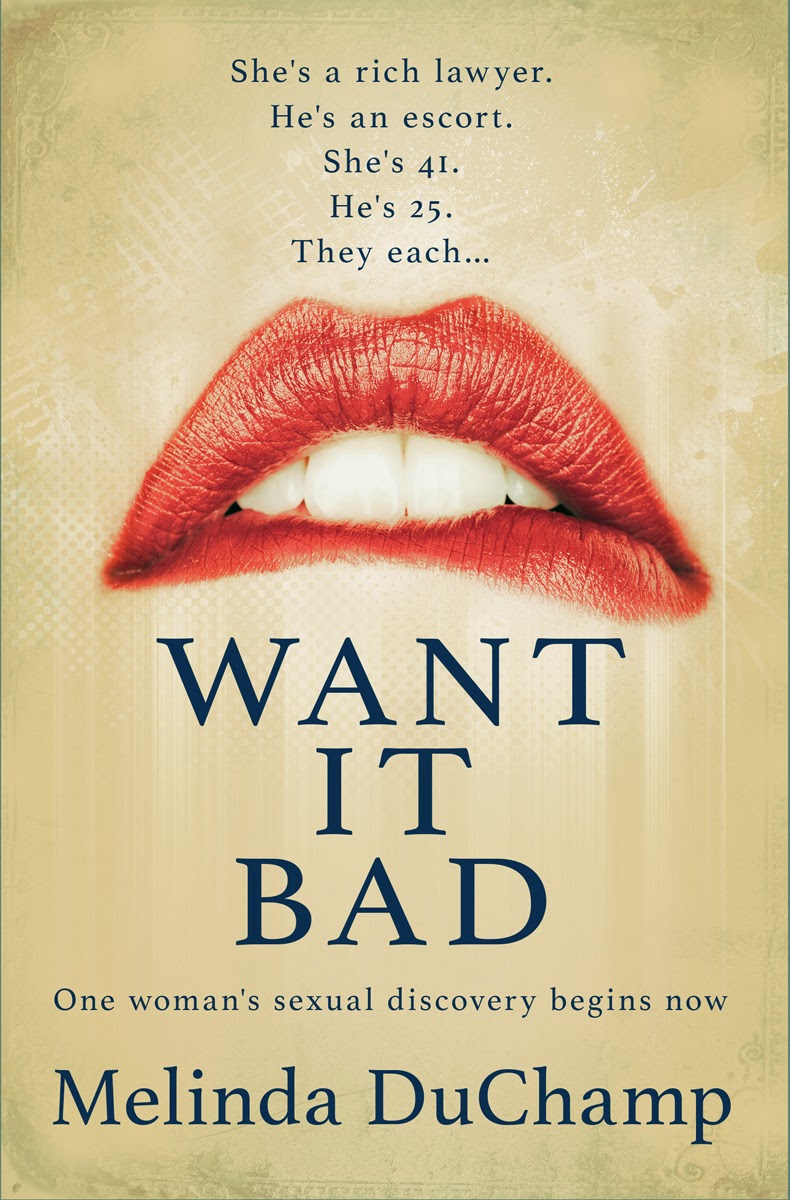
Co-written with my frequent collaborator, Ann Voss Peterson, WANT IT BAD is a departure from the smut we've penned in the past.
Not to say there isn't sex in this book. There's loads of sex. Heaps of sex. Kinky sex.
But this is the first time I've ever attempted to actually make sex essential to the arcs of the two main characters. Where 'girl meets boy' is the point of the plot.
Ann is an expert when it comes to writing romance, having done twenty-five romantic suspense books for Harlequin.
However, while I've had relationships as components of my plot before, I've never had them been the linchpin the story hangs upon. With WANT IT BAD the point of the book is the relationship, and if it will work out or not.
Here's the description: Carla thought she had it all together. Then Jake moved in next door. She never expected to fall for someone half her age. Especially Jake, an escort who specialized in very kinky sex. But Carla was curious. And rich. And when Jake accepts her as a client, they each may have gotten more than they'd bargained for... Want It Bad mixes erotic romance with laugh-out-loud humor. Sexy, funny, and outrageous, this is the book you've always wanted to read. A smart, older woman goes on a journey of sexual discovery, and somewhere along the way finds love. Or at least something equally as tasty. WANT IT BAD It begins where 50 Shades of Grey left off... Want It Bad is a 64,000 word contemporary romance by bestselling author Melinda DuChamp. It's hot. It's playful. It's more fun than the last ten books you've read. Try Want It Bad. You won't be disappointed.
So listen to the nice book description and try Want It Bad, for just $3.99 on Kindle.
So why am I writing kinky romance?
Lots of reasons.
First, because I can.
We live during the greatest time in history to be a fiction writer. Anything you can dream up, you can publish. Maybe it will find an audience. Maybe it won't.
But at least it has the chance to.
It always amuses me when the status quo preaches about how the gatekeepers of New York, in their valiant efforts to curtail the so-called Tsunami of Crap, boast how they're responsible for safeguarding literature and culture and are solely responsible for bringing books to the masses.
The opposite is the truth. The Big 5 are censors. For decades, their paper book distribution oligopoly limited what was available to readers. Their "curation", which they've touted as a feature, has actually been a gigantic bug. A censorship bug, which prevented readers from deciding for themselves what's worthy and what isn't.
It's so liberating, so intoxicating, to be able to write the kind of book I want to, without being subjected to the whims of the gatekeepers. Imagine if the Internet only allowed certain websites to be published based on what a select handful of people deemed appropriate. We'd have a far smaller, much less interesting World Wide Web.
Yet, even with the number of websites surpassing 1 billion, we can all still find worthy URLs that interest us.
Self-publishing doesn't lead to a Tsunami of Crap. It leads to freedom, more choices, better prices, and the opportunity for more writers and readers to indulge in their whims and passions.
Our male protagonist is a sex worker. An escort. A prostitute. I'm pretty sure Harlequin didn't allow that back when Ann was publishing her romance continuities. I also believe Harlequin had a guideline that once the hero met the heroine, neither were allowed to philander. Strike two. Finally, the sex in Want It Bad makes Fifty Shades of Grey look like a Disney picturebook. Harlequin may have had some racy titles, but I doubt they ever got this racy.
Which brings me to the second reason I wrote this book:
I enjoy the challenge.
Writing in a new genre is like dating someone new. It's exciting. It's fun. It's uncomfortable. It forces you to try new things, tests your limits, teaches you how to overcome obstacles, and is an opportunity for growth.
When there are no guidelines, no boundaries, no deadlines, the only limit is your own imagination.
Having the chance to write outside of your comfort zone is reason enough to try it.
What's the third reason I tried a new genre?
Diversification.
Want it Bad is my 34th novel. My largest success has been in mystery/thriller, followed by horror. Both genres continue to do well.
I made a buttload of money during the erotica boom that E.L. James created.
I made a pittance with sc-fi, even though that was crazy fun to write and I still get emails from those waiting for me to finish the Timecaster trilogy. (Which I will, someday).
Romance is the largest genre. It's the one with the most voracious readers.
I'd like those readers to discover me. There are hundreds of millions of people who aren't interested in Jack Daniels, or horror, or fairy tale erotica. But I believe my writing can entertain these people, if given the opportunity.
So here is my first try at what might be many tries, to find an audience that my previous work doesn't tempt.
Maybe it'll work. Maybe it won't. But I'm lucky that I have some breathing room to be able to experiment.
So check out Want It Bad. It has romance. It has female-buddy banter. It has humor. It has insanely kinky sex. It's a feminist, empowering, 21st century love story that couldn't have been written ten years ago because the genre, opportunity, and mindset didn't exist.
Also, I rarely ask to be tweeted, or linked to on Facebook or Google+, but as an experiment I'd like everyone reading this to do one or all of those. I'll be watching the results.